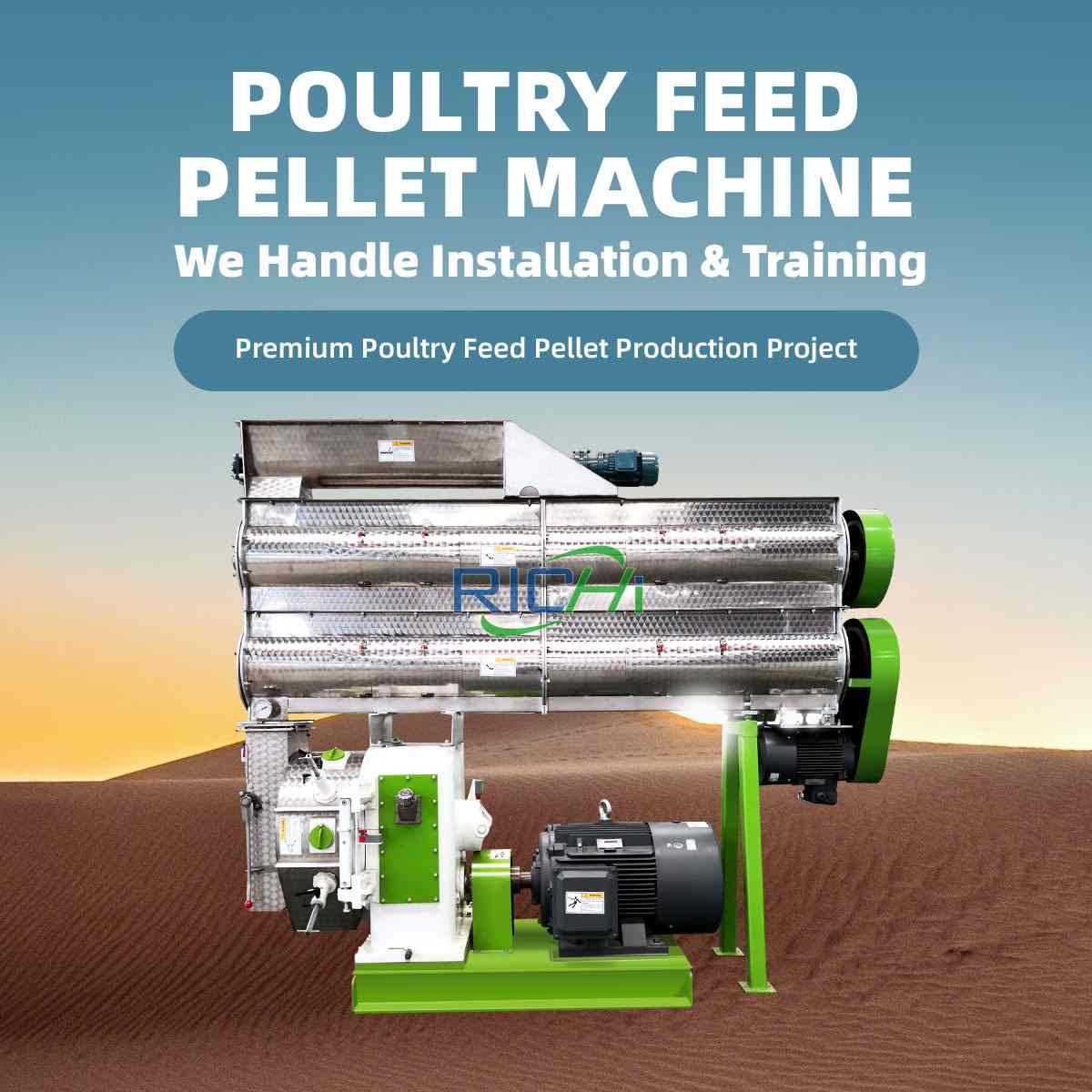
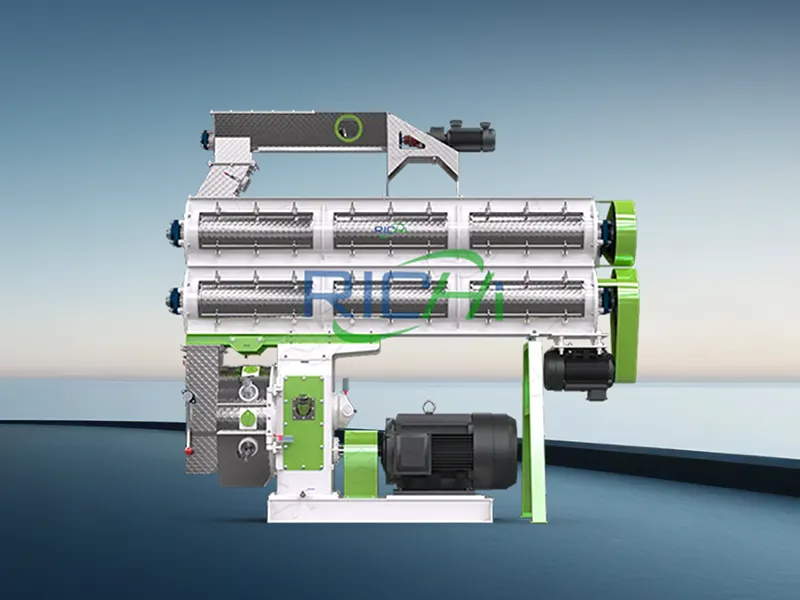
Poultry feed pellet machine price is a key factor for farmers and feed mill investors planning their production setup. Prices vary widely based on capacity, configuration, material, automation level, and brand support. Understanding these factors helps buyers choose cost‑effective and reliable equipment for long‑term use.
Factors Affecting Poultry Feed Pellet Machine Price
- Capacity: Small machines (100–500 kg/h) cost less for home and small farms; medium and large models (1–20 t/h) cost more for commercial mills.
- Configuration: Machines with a crusher, mixer, cooler, and conveyor cost more than standalone pellet mills.
- Material & Durability: Stainless steel and wear‑resistant parts increase price but extend service life.
- Power Type: Electric, diesel, and PTO models have different price ranges for different working conditions.
- Automation: Fully automatic lines with PLC control cost more but save labor and improve stability.
For more details, please see:https://www.richimanufacture.com/animal-feed-pellet-machine-for-sale/
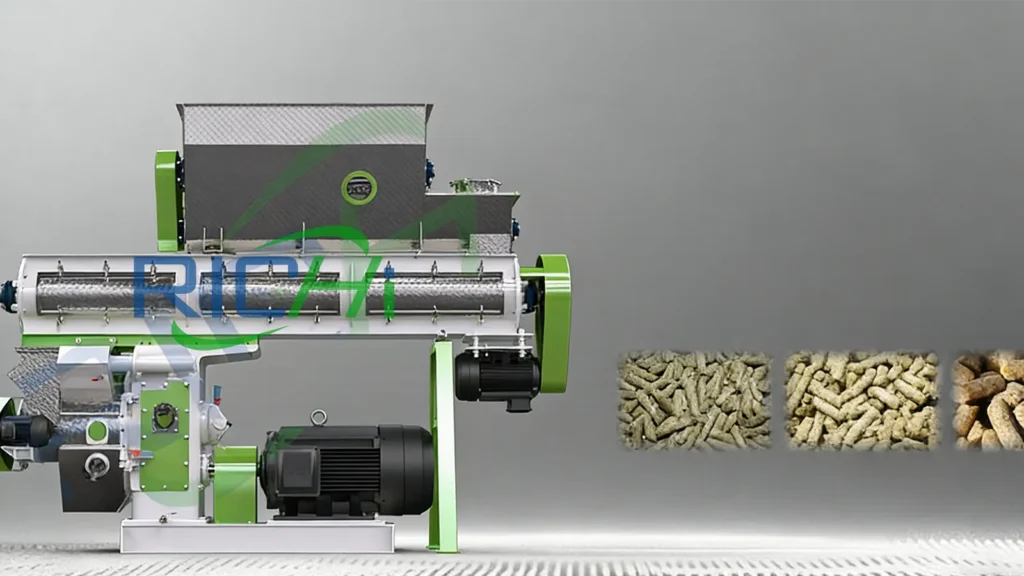
Other Animal Feed Pellet Machines & Price Ranges
Beyond poultry machines, many farms also use feed pellet equipment for other animals, with similar pricing logic.
- Cattle & Sheep Feed Pellet Machine: Designed for high‑fiber raw materials like hay and straw; price is close to poultry models but with a stronger structure.
- Pig Feed Pellet Machine: Requires fine grinding and uniform mixing; often equipped with better conditioning systems.
- Rabbit & Small Animal Feed Pellet Machine: Compact size, low power, lower price for family and small farms.This is the advantage of the 1-45T/H Rabbit pellet making machine.
- Fish Feed Extruder Machine: Special extrusion process for floating or sinking pellets; higher price than standard pellet mills.
Complete Feed Production Lines & Investment
For large‑scale production, a full feed production line is more efficient than single machines.
- Small Integrated Line (500–1000 kg/h): Includes crushing, mixing, pelleting, cooling, and packing; affordable for medium farms.
- Commercial Feed Mill (2–10 t/h): Stable output, standardized process, suitable for feed companies and large farms.
- Industrial Plant (10–45 t/h): Fully automatic, high capacity, long‑term return for large feed enterprises.
These lines support poultry, cattle, pig, sheep, and fish feed production, making them versatile for diversified farming.
Choose Reliable Supplier for Better Value
When comparing poultry feed pellet machine price, quality and after‑sales service matter as much as upfront cost. RICHI provides poultry feed pellet machines, livestock feed equipment, and turnkey production lines with stable performance and global support.
Whether you need a small poultry machine or a complete feed mill, RICHI offers customized solutions and transparent pricing to match your budget and output goals.
Conclusion
Poultry feed pellet machine price depends on capacity, structure, material, and automation. Buyers should also compare cattle, pig, fish feed machines and complete lines for full‑scene farming needs.
By balancing price, quality, and function, investors can select the most suitable equipment to improve feed quality, reduce costs, and increase profit. Working with an experienced supplier like RICHI ensures stable production and reliable long‑term value. (click to read)