

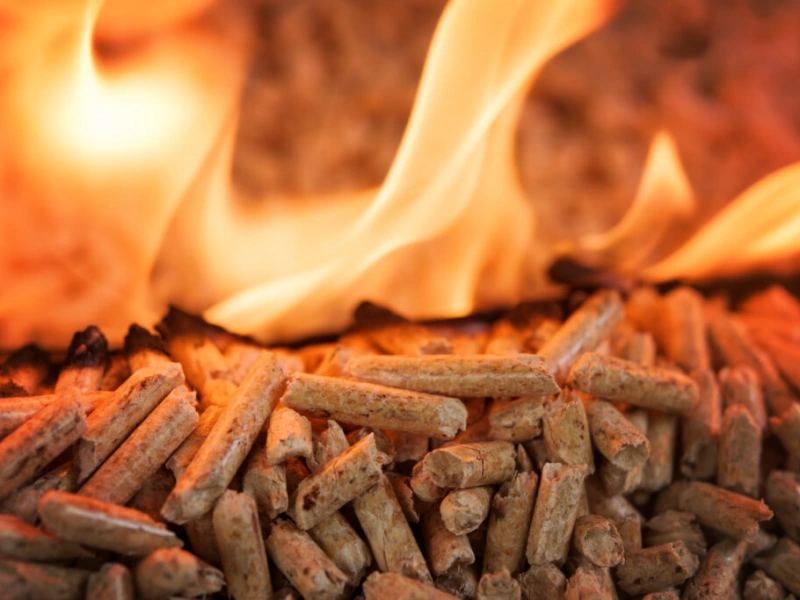
As the global wood processing industry continues to expand, large quantities of sawdust are generated every day from sawmills, furniture factories, and woodworking plants. Instead of treating this by-product as waste, many manufacturers are now turning to pelletizing technology to create valuable biomass fuel. A modern sawdust pellet machine provides an efficient and sustainable way to transform loose wood residues into high-density pellets suitable for industrial and commercial use.
Why Sawdust Is an Ideal Raw Material for Pellet Production
Sawdust is one of the most widely used raw materials in biomass pellet manufacturing. It is readily available, cost-effective, and rich in lignin, which acts as a natural binder during pelletizing. Compared with agricultural residues, sawdust offers more stable combustion performance and lower ash content, making it highly attractive for energy applications.
When processed into pellets, sawdust becomes easier to store, transport, and utilize. This conversion significantly improves its market value and opens the door to broader applications in renewable energy and heating systems.
(Related Post: https://biomasspelletizer.com/sawdust-pellet-machine/)
Key Stages of Sawdust Pellet Processing
Producing high-quality wood pellets requires a well-designed and coordinated process. A complete production system usually includes the following stages:
- Raw material preparation
Sawdust is screened to remove impurities and ensure consistent particle size. If the material is too coarse, further grinding may be required. - Drying process
Moisture control is critical for pellet quality. Sawdust with excessive moisture must be dried to an optimal level before pelletizing. - Pelletizing section
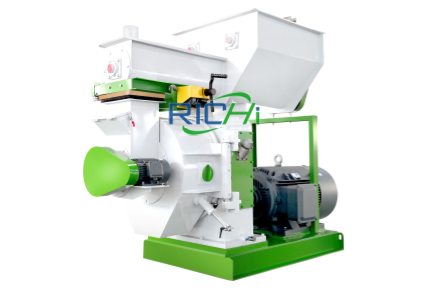
The core equipment is the pelletizer, which compresses sawdust into dense pellets under high pressure and temperature. - Cooling and packaging
Fresh pellets are cooled to improve hardness and durability, then screened and packed for storage or delivery.
This integrated workflow forms a reliable industrial sawdust wood pellet production line solution for continuous and large-scale operation.
Advantages of Using a Sawdust Pellet Machine in Industry
Adopting pelletizing technology offers multiple benefits for wood processing enterprises and biomass investors:
- Higher resource utilization: Converts waste into a profitable product
- Stable fuel quality: Uniform size and density ensure efficient combustion
- Reduced transportation costs: Pellets are compact and easy to handle
- Environmental compliance: Supports carbon reduction and renewable energy goals
With rising energy prices and stricter environmental policies, sawdust pellet production is becoming a strategic investment across many regions.
Common Application Scenarios for Wood Pellets
Sawdust pellets are widely used in industrial boilers, biomass power plants, district heating systems, and commercial heating facilities. In some markets, they are also used as residential heating fuel due to their clean-burning properties.
For companies evaluating different pellet plant layouts and equipment configurations, industry references and technical examples can provide valuable guidance. If you are researching practical setups and performance comparisons, you can look here to gain insights into how modern sawdust pellet plants are designed and operated.
How to Choose the Right Pelletizing Equipment
Selecting the appropriate pellet machine is crucial for long-term productivity and cost control. Buyers should focus on several key factors:
- Pressing capacity and output stability
- Die and roller material suitable for wood fibers
- Energy consumption per ton of pellets
- Ease of maintenance and spare parts support
A well-engineered sawdust pellet machine ensures consistent output even under demanding industrial conditions and helps minimize downtime.
Market Outlook for Sawdust Pellet Production
As demand for renewable biomass fuel continues to grow, sawdust pellets are gaining strong acceptance in both domestic and international markets. Wood-rich regions benefit from abundant raw materials, while energy-importing countries increasingly rely on biomass pellets to diversify their fuel mix.
With proper planning and equipment selection, sawdust pellet production can deliver long-term economic and environmental benefits. For manufacturers seeking to upgrade waste utilization and enter the renewable energy sector, pelletizing technology represents a practical and future-oriented solution.