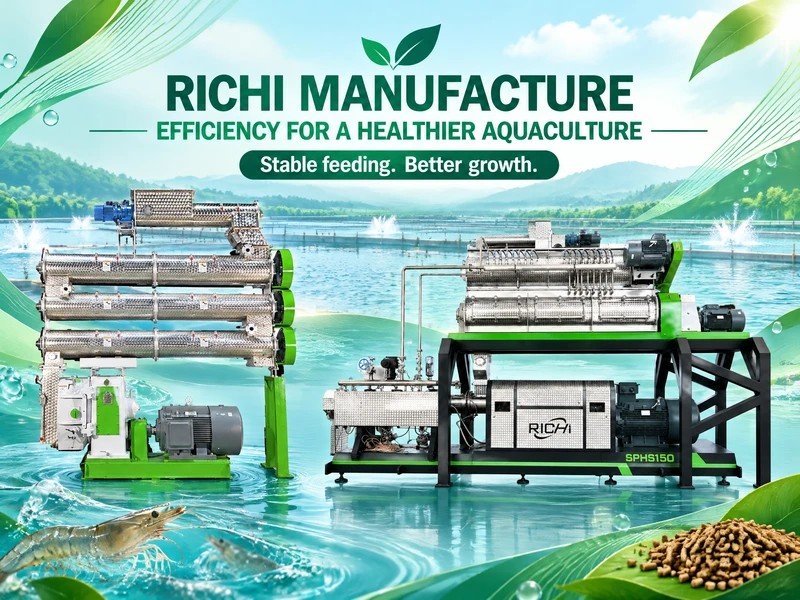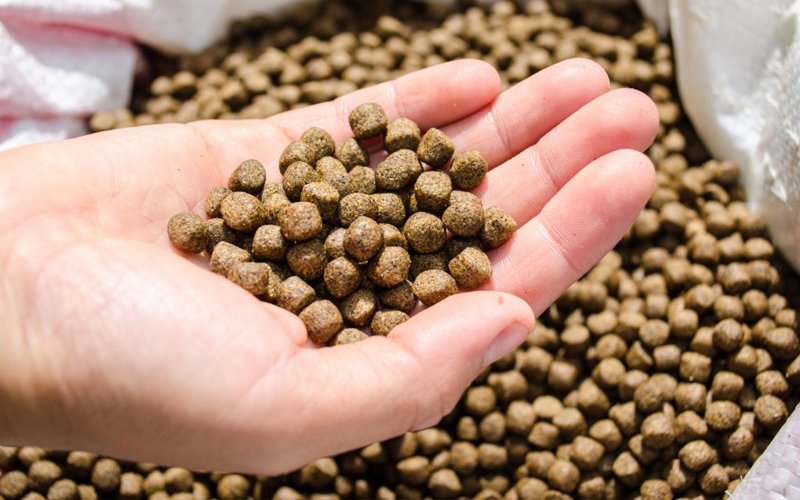


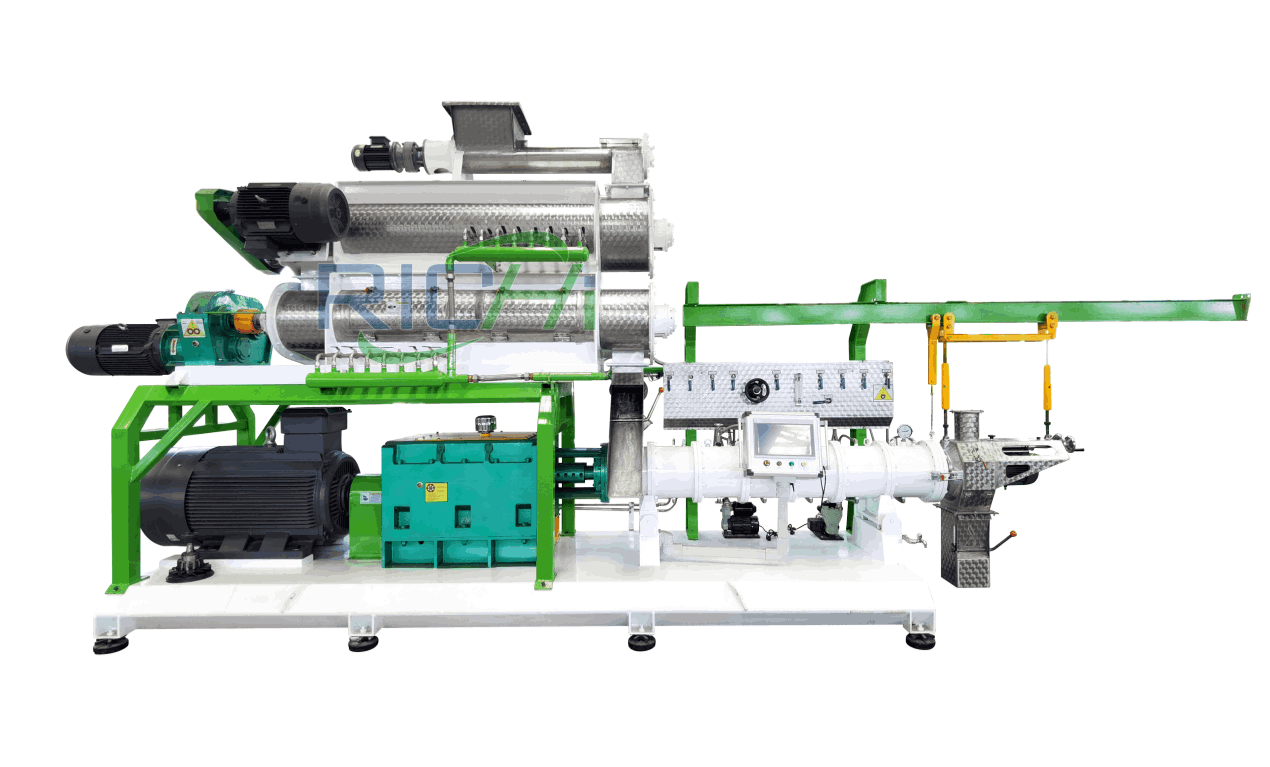
Floating fish feed is widely used in aquaculture because the pellets remain on the water surface for a period of time, allowing farmers to observe feeding activity and adjust the feeding amount.
Producing this type of feed requires more than simply forming ingredients into pellets. Raw material preparation, conditioning, extrusion, drying, cooling, and screening all affect the final product.
The extrusion section is therefore one of the most important parts of a floating fish feed production system.
What Is Floating Fish Feed?
Floating fish feed consists of formulated ingredients that are processed under controlled pressure and temperature to create pellets with a lower bulk density.
During extrusion, moisture, heat, and mechanical pressure cause changes in the feed mixture. As the material exits the die, pressure drops rapidly, allowing the product to expand.
This expansion can reduce pellet density enough for the finished feed to remain floating on water.
The exact floating performance depends on the formulation, moisture content, extrusion conditions, die configuration, and operating parameters.
Raw Material Preparation
Fish feed production normally starts with grinding and ingredient preparation.
Common ingredients may include fish meal, soybean meal, corn, wheat flour, rice bran, oils, vitamins, minerals, and other nutritional ingredients.
The ingredients should first be reduced to a suitable particle size. Fine and relatively uniform particles can improve mixing and provide more consistent extrusion.
After grinding, the ingredients are accurately weighed and mixed according to the feed formulation.
A consistent mixture is important because uneven ingredient distribution can lead to differences in pellet size, density, and nutritional composition.
Extrusion Process
The prepared feed mixture is then transferred to the extrusion section.
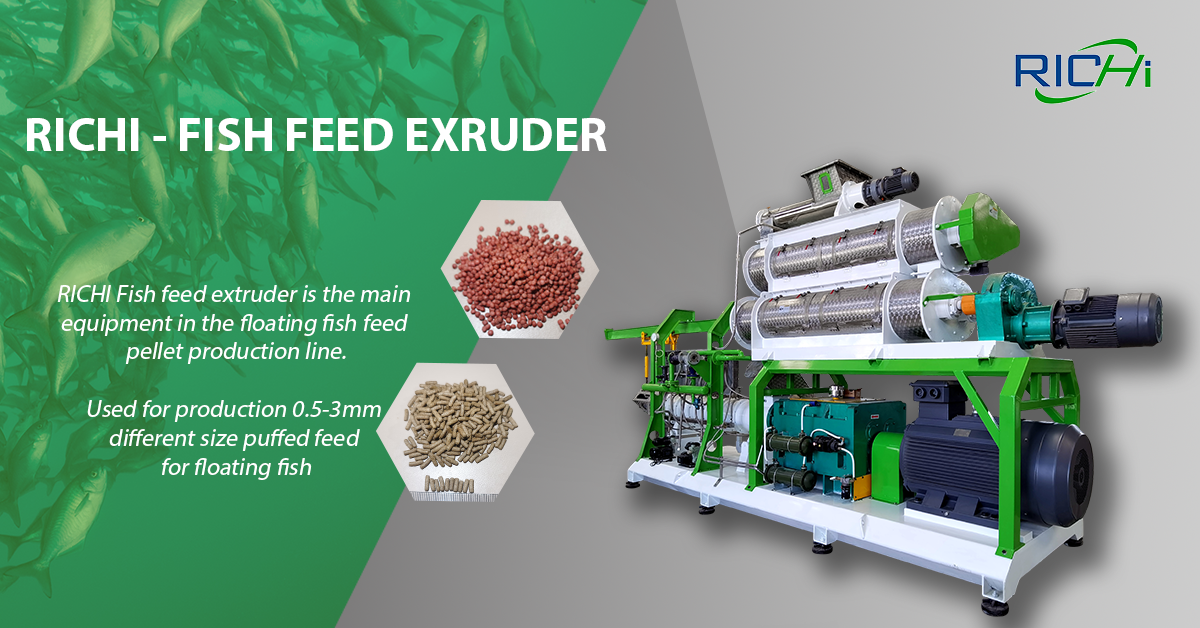
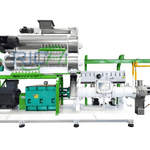
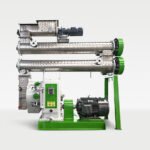
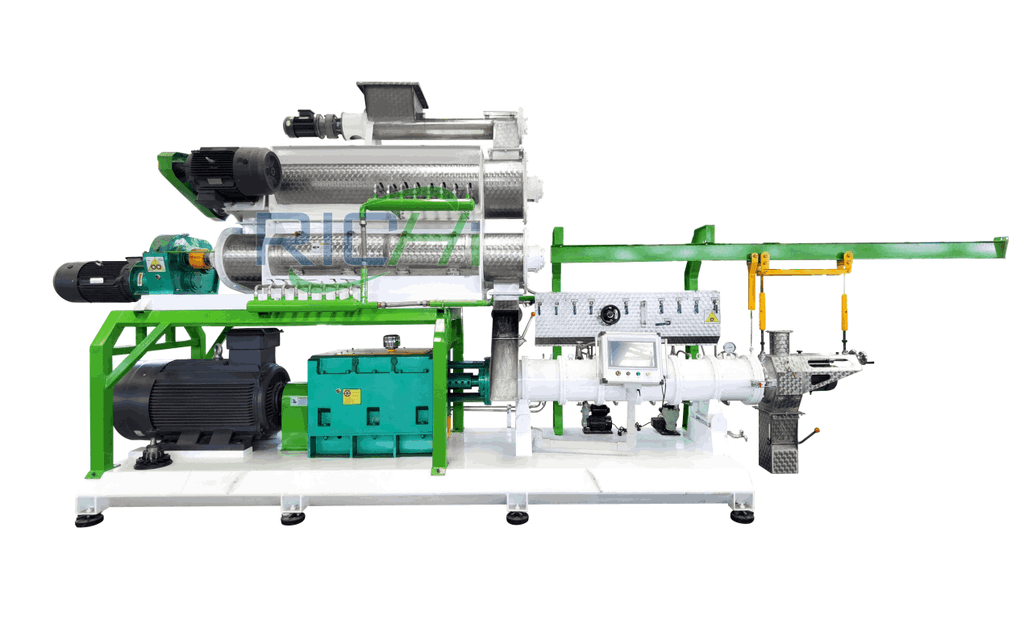
A floating fish feed extruder machine uses mechanical energy to process the mixture under controlled conditions. Depending on the equipment design, water or steam can be introduced during conditioning or extrusion.
Inside the extruder, the material is conveyed by the screw while being subjected to heat, pressure, and shear.
When the processed material passes through the die, the sudden pressure reduction causes expansion. A cutter then cuts the expanded product into pellets of the required length.
Die openings and cutter settings influence the final pellet dimensions.
Why Conditioning Matters
Conditioning can help prepare the feed mixture before extrusion.
Moisture and heat soften the material and can improve its processing characteristics. Proper conditioning also helps stabilize the extrusion process and reduce unnecessary mechanical stress.
However, the ideal conditions vary according to the feed formula and equipment.
For this reason, extrusion parameters should be established through testing rather than applying exactly the same settings to every type of fish feed.
Drying and Cooling
Freshly extruded floating feed contains moisture and heat, so it normally requires downstream treatment.
A dryer reduces the moisture content to a level suitable for storage. Excessive residual moisture can shorten shelf life and increase the risk of product deterioration.
After drying, the feed is cooled before screening and packaging.
Cooling helps bring the product closer to ambient temperature and prepares it for storage.
Screening and Oil Coating
Screening removes loose fines and particles outside the desired size range.
Depending on the formulation and product requirements, oil or other liquid nutrients may also be applied after drying. A coating system can distribute the added material more evenly over the pellet surface.
This is particularly useful when additional oil is required but the formulation or extrusion conditions limit how much can be introduced before extrusion.
Equipment Configuration
A basic floating fish feed production line may include:
- Raw material grinder
- Ingredient dosing system
- Mixer
- Conditioner
- Fish feed extruder
- Cutter
- Dryer
- Cooler
- Vibrating screen
- Coating system
- Conveyors
- Packing machine
Small farms may use a simpler setup, while commercial feed manufacturers normally require greater automation and material-handling capacity.
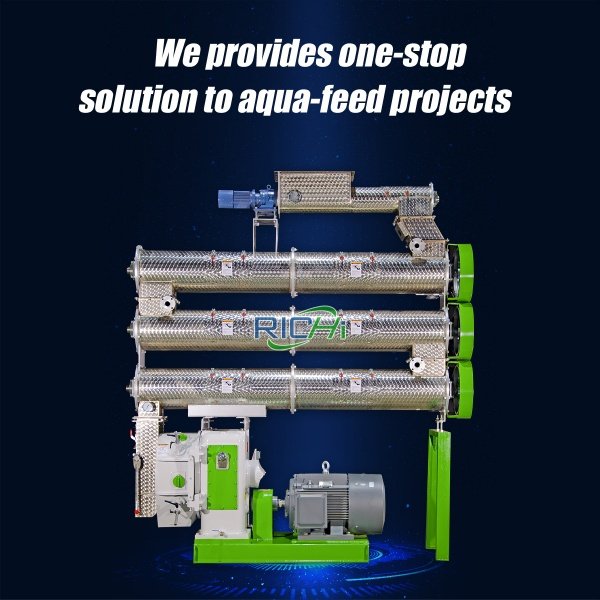
For projects producing multiple types of aquaculture feed, a 5T/H fish feed pellet making machine may also be included in the overall equipment planning, depending on whether both extruded and conventional pelleted products are required.
Floating Feed Applications
Floating feed is commonly used for species such as tilapia, carp, catfish, and other farmed fish.
One practical advantage is that farmers can observe how quickly the fish consume the feed. This can make it easier to adjust feeding quantities and reduce unnecessary feed waste.
Different species and growth stages require different nutritional formulations and pellet sizes, so the production system should be designed around the intended products.
Planning a Production System
Before selecting equipment, several factors should be considered:
- Target fish species
- Feed formulation
- Required pellet diameter
- Floating performance
- Production capacity
- Raw material moisture
- Required drying capacity
- Desired automation level
- Packaging method
A complete production system should match these requirements rather than being selected according to extruder capacity alone.
Floating fish feed production is therefore a coordinated process in which grinding, mixing, conditioning, extrusion, drying, cooling, and screening all contribute to the final product. Proper equipment matching and process control can help maintain stable output and consistent pellet characteristics.
For additional information about extrusion equipment and fish feed processing, resource materials can provide useful guidance when planning a new production line.
Related Post: https://pelletizerequipment.com/wood-chip-pellet-machine/