

What Should You Know Before Making Cattle Feed Pellets?
Cattle feed pellet production may look simple from the outside: prepare the ingredients, compress them into pellets, cool the product, and pack it. In practice, however, producing consistent pellets requires several interconnected processes.
The choice of raw materials, particle size, moisture content, feed formulation, pellet diameter, production capacity, and equipment configuration can all affect the final product.
This is why choosing machinery should normally come after understanding the feed itself. A producer who knows the expected formulation and output can make more informed decisions about grinding, mixing, pelleting, cooling, and packaging equipment.
For a small farm, the process may be relatively straightforward. A commercial feed manufacturer, on the other hand, may need a complete system involving automatic batching, multiple storage bins, conveyors, dust collection, steam conditioning, and computerized control.
The following questions can help explain how to approach the planning process.
What Raw Materials Can Be Used for Cattle Feed Pellets?
Cattle feed can contain a wide range of ingredients, depending on the nutritional requirements of the animals and the availability of agricultural materials in a particular region.
Corn is widely used as an energy source, while wheat, barley, sorghum, and other grains may also be included. Protein ingredients can include soybean meal, rapeseed meal, cottonseed meal, peanut meal, and various agricultural by-products.
Fibrous ingredients are also important in many cattle diets. Alfalfa, grass, straw, corn stalks, and other forage materials may be processed into smaller particles before being incorporated into a feed formula.
Mineral and nutritional additives can include salt, limestone, phosphate sources, vitamins, and trace minerals. Some formulations may also contain molasses, vegetable oil, or other liquid ingredients.
There is no universal ingredient ratio that works for every type of cattle. Calves, growing cattle, beef cattle, and dairy cows have different nutritional requirements. Therefore, the formulation should be established according to the target animals rather than copied from another farm without adjustment.
Does Particle Size Really Affect Pellet Quality?
Particle size can have a significant effect on pellet formation.
If particles are too large, the mixture may not be sufficiently uniform, and larger pieces can make it more difficult to produce dense, stable pellets. If materials are ground excessively fine, however, the process may consume unnecessary energy and generate more dust.
The appropriate particle size depends on the ingredients and the intended feed product. Grain-based formulas may require one grinding specification, while formulas containing larger quantities of fibrous material may require another.
A hammer mill is commonly used in feed processing because it can handle many common feed ingredients and allows particle size to be adjusted through screen selection.
The important point is that grinding should be designed around the formulation. There is little benefit in choosing a grinding specification without considering what happens later during mixing and pelleting.
How Does a Cattle Feed Pellet Making Machine Work?
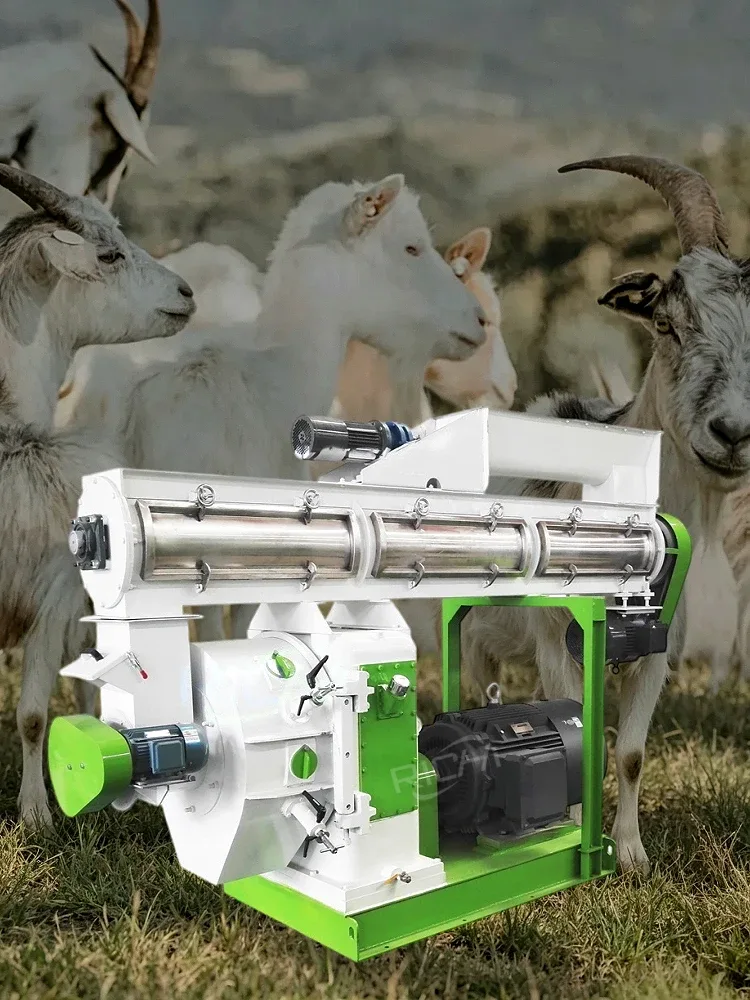
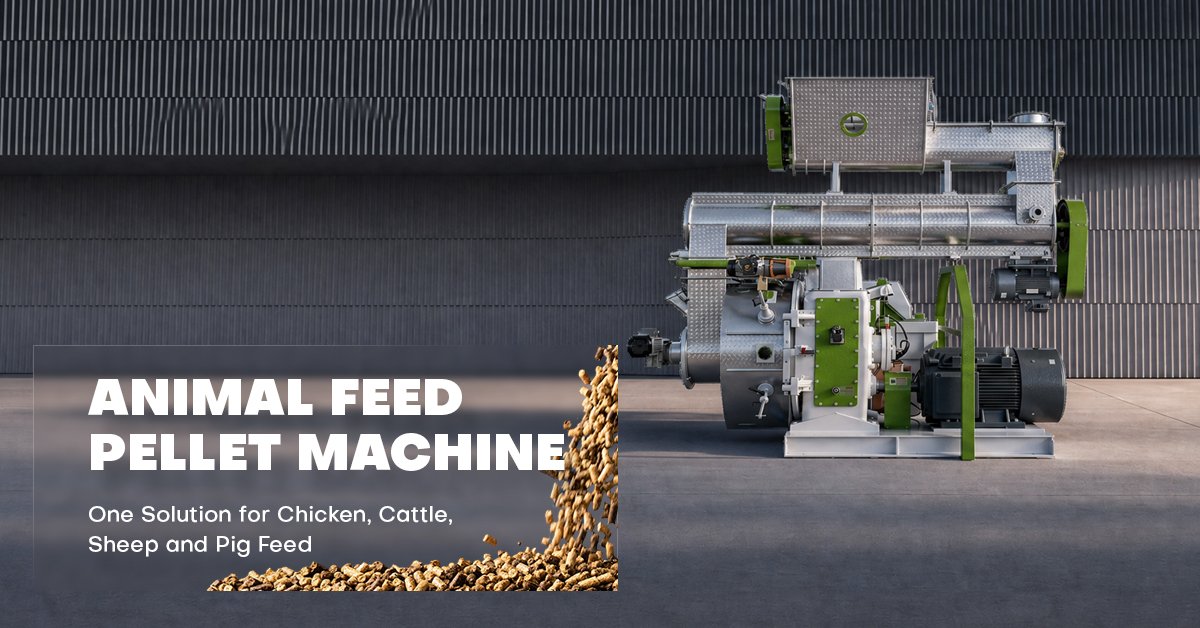
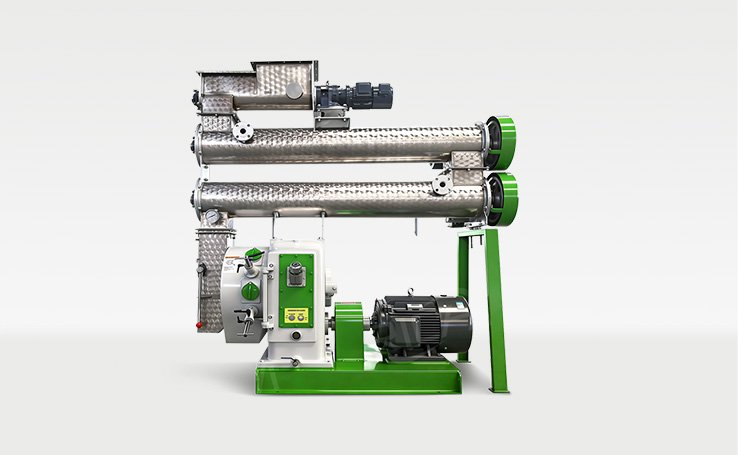
The central pelleting equipment compresses prepared feed into compact cylindrical particles by forcing the material through openings in a metal die.
A typical cattle feed pellet making machine contains a feeding system, compression chamber, rollers, die, drive system, and discharge arrangement. Depending on the design, additional components may be used to control feeding rate, conditioning, and pellet length.
Inside the compression chamber, rotating rollers push the feed mixture toward the die. Pressure forces the material through the die holes, creating continuous strands that are then cut into pellets.
Pellet diameter is mainly determined by the die. Different cattle feed products may use different pellet sizes according to the animals’ age and feeding requirements.
However, the machine itself is only one factor affecting pellet quality. Formula, moisture, particle size, conditioning, roller adjustment, die condition, and feeding rate all influence how the equipment performs.
This is why selecting machinery based only on its advertised capacity can lead to unrealistic expectations.
Is Steam Conditioning Necessary for Cattle Feed?
Steam conditioning is often used in medium- and large-scale feed mills.
During conditioning, steam is introduced into the feed mixture before it enters the pellet mill. The added heat and moisture can soften the material and improve its ability to bind together under pressure.
Proper conditioning can also influence pellet durability and production stability. However, the exact conditioning parameters depend on the feed formula and raw material characteristics.
For a small operation producing relatively simple feed, a basic pelleting process may be adequate. A commercial plant with higher output may benefit from a dedicated conditioner, steam boiler, moisture-control system, and related equipment.
The decision should therefore be based on the actual production requirements rather than assuming that every feed mill needs the same conditioning configuration.
Does Cattle Feed Production Require Liquid Additives?
Not every cattle feed formula requires liquid ingredients.
Some formulas may include molasses, vegetable oil, liquid vitamins, fats, or other additives. When these materials are used, the production line needs a reliable method for measuring and distributing them.
Molasses, for example, is relatively viscous. Simply adding it manually to a large quantity of dry ingredients may result in uneven distribution.
Commercial systems can use storage tanks, pumps, pipelines, meters, and spraying devices to introduce liquid ingredients at controlled rates.
Whether such equipment is necessary depends on the formula and production capacity. Adding unnecessary liquid-handling equipment to a simple feed line can increase both investment and maintenance requirements.
For this reason, the feed formula should be finalized before deciding how complex the liquid-addition system needs to be.
How Do You Choose the Right Production Capacity?
Production capacity should be based on realistic demand.
For example, a farmer producing feed for their own cattle may only require a few tons per day. A regional feed supplier serving multiple farms may need substantially greater output.
A useful calculation starts with expected daily or annual demand. Operating hours, maintenance time, cleaning, product changes, and seasonal variations should then be considered.
It is also worth leaving some room for future growth. However, excessive capacity can result in unnecessary equipment investment and lower equipment utilization.
For a new business, the most suitable capacity is often the one that matches expected sales and operating conditions rather than the maximum capacity that can technically be installed.
What Equipment Is Needed for a Complete Cattle Feed Line?
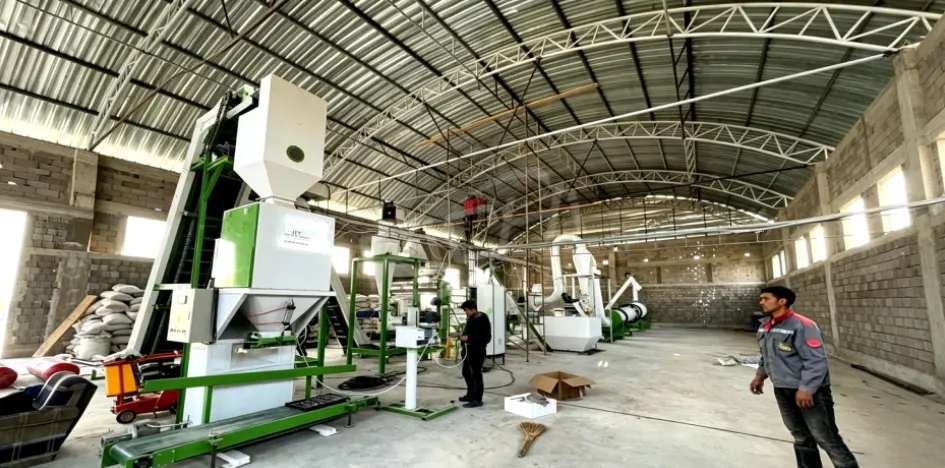
A complete feed production line can contain several sections:
1. Raw material receiving and cleaning
Materials are received, inspected, and cleaned before processing.
2. Grinding section
Grains and other suitable materials are reduced to the required particle size.
3. Batching section
Ingredients are accurately weighed according to the feed formula.
4. Mixing section
Different ingredients are combined into a uniform mixture.
5. Conditioning and pelleting section
The feed may be conditioned before entering the pellet mill.
6. Cooling section
Hot pellets are cooled and stabilized after pelleting.
7. Screening section
Fines and oversized particles are separated from qualified pellets.
8. Packaging or bulk storage
Finished feed is packed into bags or transferred to storage systems.
The exact configuration can be simplified or expanded according to production capacity and product requirements.
Related Post: https://commercialpelletmill.com/animal-feed-machine/
Should Finished Pellets Be Cooled Immediately?
Yes. Freshly produced pellets are generally hot and contain more moisture than the desired final storage condition.
Cooling reduces pellet temperature and helps remove excess moisture. This makes the product more suitable for storage and packaging.
A counterflow cooler is widely used in commercial feed plants. Ambient air passes through the hot pellets, transferring heat and moisture away from the product.
If cooling is inadequate, pellets may remain warm or retain excessive moisture, increasing the risk of quality problems during storage.
The cooling system therefore needs to be matched with the output of the pellet mill.
How Much Does a Cattle Feed Plant Cost?
The total investment varies considerably depending on plant capacity and configuration, so the question how much does a cattle feed plant cost cannot be answered with one standard figure.
A small line with basic equipment will have a very different investment profile from an automated commercial feed mill.
The main cost categories can include:
- Feed processing machinery
- Conveying equipment
- Storage bins or silos
- Electrical and control systems
- Dust collection
- Steam and conditioning equipment
- Packaging equipment
- Workshop construction
- Installation and commissioning
- Transportation
- Supporting infrastructure
Raw material storage can also have a major influence on the project budget. A plant purchasing grain in bulk may require significantly more storage infrastructure than a small farm purchasing ingredients in bags.
Therefore, a meaningful project estimate should be based on a complete process design rather than the price of the pellet mill alone.
What Is the Construction Period for a Small Feed Line?
The construction period depends on the project scope.
A simple small-scale system may be installed relatively quickly once the workshop and foundations are ready. More complicated plants can take longer because they involve more equipment, steel structures, storage systems, electrical work, and commissioning procedures.
The process can generally be divided into design, equipment manufacturing, transportation, installation, wiring, testing, and trial production.
Workshop preparation should ideally begin while the equipment is being manufactured. This can reduce idle time after the machinery arrives.
Before commissioning, operators should also understand basic machine operation, lubrication, cleaning, safety procedures, and routine maintenance.
Good preparation can be just as important as the equipment itself when it comes to keeping the project on schedule.
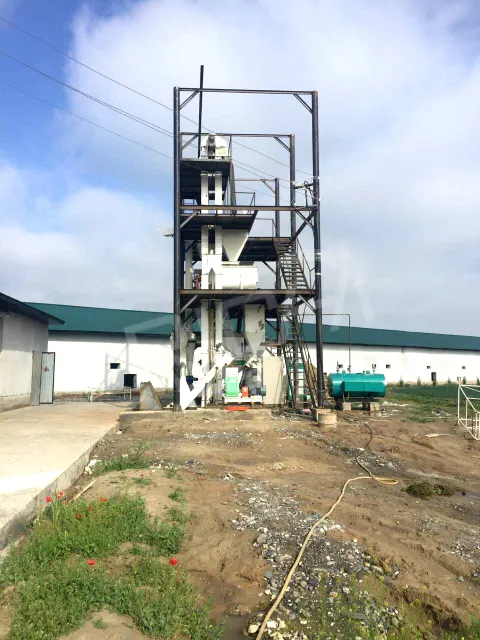
What Should Be Considered When Designing the Workshop?
A feed workshop should be designed around material flow.
Raw materials should have convenient access to the receiving area. After grinding and batching, ingredients should move efficiently toward mixing and pelleting. Finished pellets then need a clear route to cooling, screening, storage, or packaging.
Maintenance access should also be included in the design.
Machines such as hammer mills, pellet mills, coolers, and mixers contain components that require regular inspection or replacement. Operators need enough working space to safely perform these tasks.
Dust collection points should be identified during the design stage rather than added as an afterthought.
A well-planned workshop does not necessarily have to be large. What matters is that the available space is used logically and allows operators to work safely and maintain the equipment conveniently.
How Can Energy Consumption Be Reduced?
Energy efficiency is increasingly important as electricity prices and production volumes increase.
Grinding and pelleting are often among the major electricity-consuming stages. Selecting properly sized motors and avoiding unnecessary overloading can help maintain efficient operation.
Regular maintenance is equally important. Worn bearings, damaged screens, poorly adjusted rollers, and other mechanical problems can increase energy consumption or reduce throughput.
The process itself should also be optimized. Producing feed with unnecessarily small particle sizes, for example, can increase grinding energy without providing a corresponding benefit.
Energy efficiency should therefore be considered from the perspective of the complete process rather than focusing on one machine.
How Should a New Feed Producer Choose a Supplier?
When evaluating equipment suppliers, it is useful to examine more than product catalogs.
Project experience, process design capability, equipment integration, installation support, spare parts availability, and technical communication can all affect the long-term operation of a feed plant.
A supplier should also be able to understand the raw materials and production requirements before recommending a configuration.
If you are researching different manufacturers and want to understand their background and business scope, try this web-site to learn more about the company before comparing specific equipment configurations.
The purpose of this type of research is to gather technical information and determine whether a proposed solution fits the actual project.
What Maintenance Does Feed Pellet Equipment Need?
Regular maintenance is essential for stable feed production.
Hammer mill screens and hammers need to be inspected periodically. Mixers require attention to bearings, paddles, shafts, and seals. Pellet mills require regular inspection of dies, rollers, bearings, and lubrication systems.
Coolers, conveyors, elevators, and screening equipment also contain moving components that should be checked according to the manufacturer’s maintenance schedule.
Cleaning should not be ignored. Accumulated feed material can affect equipment performance and create hygiene concerns.
Preventive maintenance is generally easier to manage than waiting for a major breakdown. Keeping records of operating hours, component replacement, and maintenance activities can help operators identify recurring problems.
Can One Production Line Make Different Cattle Feed Formulas?
In many cases, yes, but the degree of flexibility depends on the equipment configuration.
A line producing several formulas needs an appropriate batching and mixing system. The process must also account for ingredient changes and cleaning requirements between products.
If formulas differ significantly in particle size or processing characteristics, the grinding and pelleting settings may need adjustment.
Product changeover becomes increasingly important for commercial feed manufacturers producing multiple feed types.
An automated control system can help manage formulas, ingredient dosing, production sequences, and operating parameters. However, automation should be selected according to the actual complexity of the plant.
What Are the Most Common Planning Mistakes?
Several mistakes can make a feed project more complicated than necessary.
One is selecting equipment based entirely on advertised capacity. Another is purchasing a pellet mill before determining the raw material characteristics and feed formulation.
Insufficient storage is another common problem. A production line may have adequate processing capacity but still experience interruptions because raw materials cannot be received, stored, or transferred efficiently.
Ignoring cooling and screening capacity can create bottlenecks after pelleting.
It is also important not to overlook maintenance access, dust collection, electrical requirements, and spare parts.
Perhaps the most useful principle is to design the production process first and select individual machines afterward.
Final Thoughts: What Makes a Well-Planned Feed Plant?
A successful cattle feed pellet project is not defined by one particular machine. It depends on how well the raw materials, formulation, processing equipment, production capacity, storage system, and operating conditions work together.
Small farms may benefit from a simple and practical configuration, while commercial producers may require automated batching, larger storage capacity, steam conditioning, sophisticated control systems, and automatic packaging.
Before investing in equipment, it is worth answering several fundamental questions: What type of cattle feed will be produced? Which raw materials are available? How much feed is actually needed? What pellet size is appropriate? Will liquid ingredients be used? How much space is available? And how much automation is truly necessary?
Once these questions have been answered, equipment selection becomes much more straightforward.
For projects requiring customized process design, suppliers such as RICHI Machinery Manufacture can be evaluated based on their equipment range, engineering experience, process solutions, and ability to adapt a production line to specific raw materials and capacity requirements.
Ultimately, the best approach is to treat cattle feed production as a complete process rather than simply a machine purchase. Careful planning at the beginning can help create a feed line that is easier to operate, maintain, expand, and adapt as production requirements change.