

Starting a feed production business is one challenge. Designing it so that the business can grow without rebuilding everything is another.
Many feed manufacturers begin with a relatively small production target. They may serve one livestock sector, use locally available ingredients, and operate a single shift.
As customer demand grows, new problems appear.
Storage becomes insufficient. Packaging becomes slow. The original mixer may no longer keep up. Manual batching becomes difficult. Customers request different pellet sizes.
At this point, the business faces a choice: replace the existing system or expand it.
A scalable production design can make the second option much easier.
Growth Should Be Considered Before the First Machine Is Purchased
Future expansion does not mean buying oversized equipment from day one.
Instead, it means leaving room for practical upgrades.
A business can start with a reasonable production capacity while preparing the factory layout for future additions.
Potential expansion areas include:
- Additional pellet mills
- Larger mixers
- More storage bins
- Automatic packaging
- Expanded conveyors
- Additional raw-material storage
- More advanced control systems
This staged approach can reduce initial investment while preserving growth potential.
What Does a Scalable Feed Factory Look Like?
A scalable feed factory usually has a logical material flow.
For example:
Raw-material receiving → storage → grinding → batching → mixing → pelletizing → cooling → screening → packaging → finished-product storage
Each stage should have enough capacity for the current project while allowing future upgrades.
The building layout should also avoid placing permanent structures where future equipment may need to be installed.
This type of planning is especially useful for businesses that expect demand to increase over several years.
Why Raw-Material Storage Matters
Feed production cannot continue without ingredients.
A factory may have excellent pelletizing equipment but still experience production interruptions if raw-material supply is poorly managed.
Storage should consider both current and future requirements.
For grains, silos or bins may be appropriate.
For hay and alfalfa, warehouse storage may be more practical.
For bagged ingredients, pallet storage can simplify inventory management.
The storage method should reflect the physical characteristics of each material.
Flexible Ingredient Handling
A growing feed factory may gradually add more ingredients.
At first, the formula may contain only several major components.
Later, customers may request additional protein sources, minerals, additives, or forage ingredients.
The material-handling system should therefore have some flexibility.
Additional storage bins can make formula changes easier.
Automated dosing systems can improve accuracy.
Separate storage can also reduce cross-contamination between ingredients.
Why Grinding Capacity Matters
Grinding can become a bottleneck as production grows.
A small grinder may supply enough material for a 1 T/H pelletizer but struggle to keep up when production increases.
This is why expansion planning should consider the entire production chain.
If the initial factory is designed for future growth, the grinder may be selected or positioned so that an additional unit can be added later.
The same principle applies to conveyors and storage.
Mixing Capacity Should Match Production
The mixer is another critical point.
Suppose a factory adds a second pellet mill but continues using a mixer that can only prepare enough material for the original machine.
The additional pelletizer will not significantly increase total production.
The factory needs balanced capacity.
A scalable system should therefore evaluate the relationship between:
Grinding capacity → batching capacity → mixing capacity → pelletizing capacity
This prevents one machine from becoming a permanent bottleneck.
Choosing the Right Pelletizing System
The central equipment must support both current requirements and future plans.
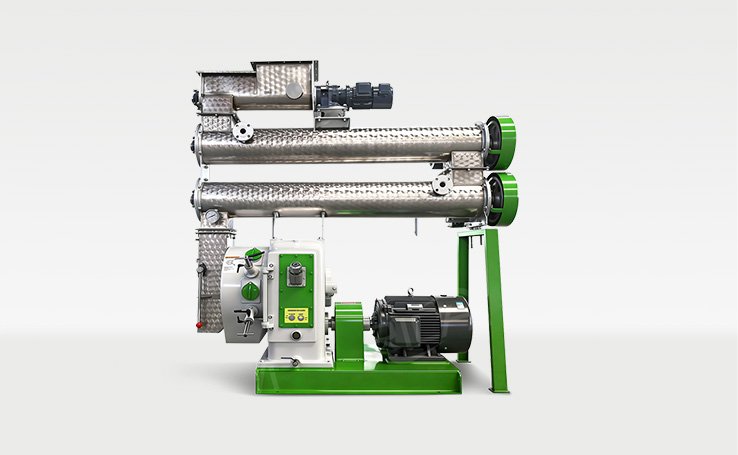
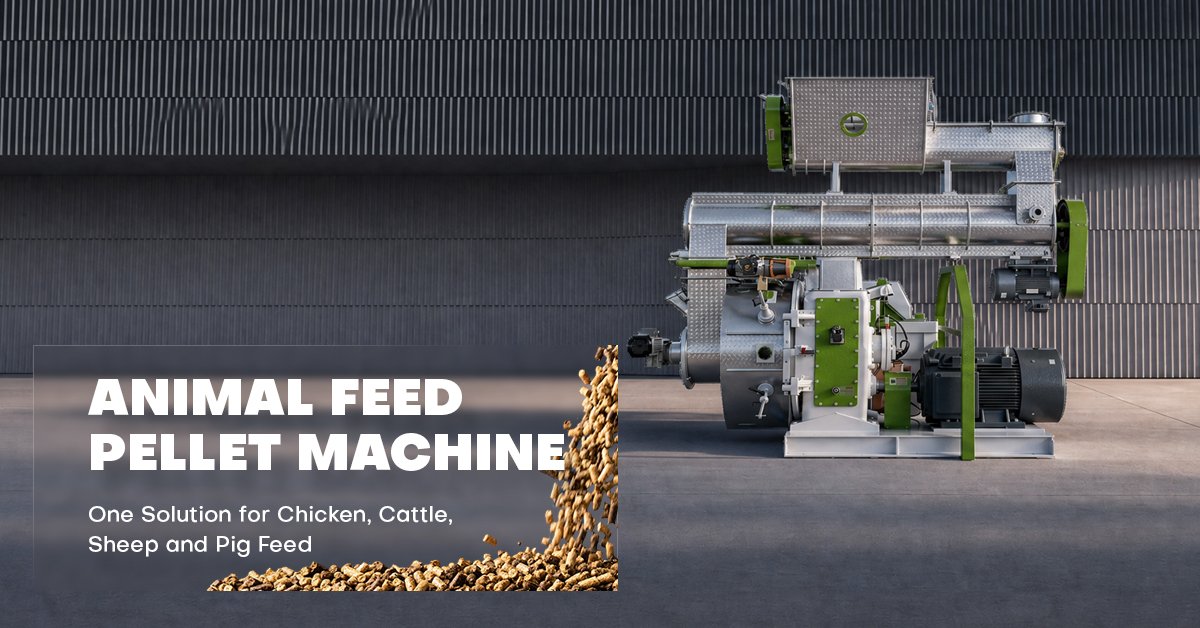
A Animal Feed pellet mill should be evaluated according to:
- Current capacity
- Expected future demand
- Pellet diameter
- Feed formula
- Raw-material characteristics
- Operating hours
- Maintenance requirements
For a smaller facility, adding another pelletizer later may be more practical than purchasing a very large machine immediately.
Rabbit Feed as an Expansion Starting Point
Rabbit feed can represent a practical starting product for some regional feed businesses.
A producer may initially manufacture a limited range of rabbit pellets and gradually add other livestock products.
A 1-2 T/H rabbit pellet machine for sale can provide a manageable production scale for certain smaller commercial projects.
As demand increases, the factory can potentially expand storage, mixing, packaging, and pelletizing capacity.
The important point is to design the original facility so that expansion is physically possible.
Moving Into Alfalfa Products
Once the factory develops experience with feed pellet production, it may explore alfalfa-based products.
Alfalfa can be processed into forage pellets or incorporated into complete feed formulas.
A 3-4 T/H alfalfa pellet mill for sale may be appropriate for a larger operation with sufficient local alfalfa supply.
However, alfalfa introduces additional considerations around fiber preparation and moisture management.
If the factory intends to switch between alfalfa products and complete livestock feed, the production system should be designed for those changes.
Goat Feed Can Add Another Market
Goat feed can provide another opportunity for market expansion.
A manufacturer that already produces rabbit or forage-based products may have access to similar ingredients that can be incorporated into goat feed formulations.
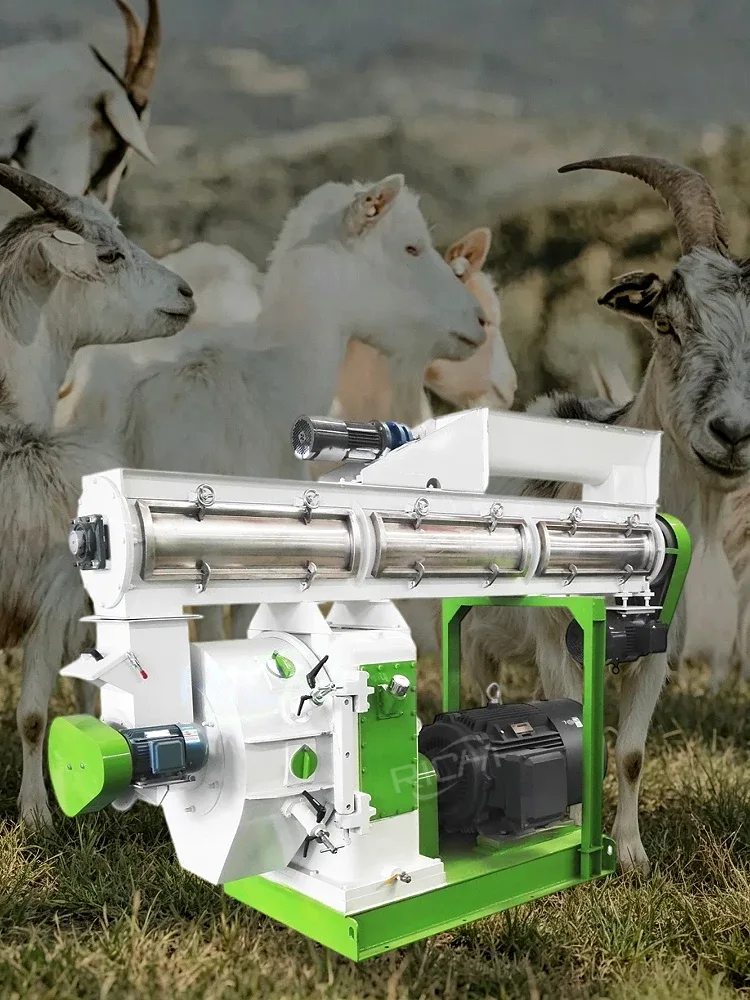
A 2-3 T/H goat feed pellet making machine for sale may suit a moderate production target.
The actual capacity should depend on regional goat farming demand, customer contracts, and expected growth.
Adding a new product should not automatically mean purchasing a completely separate production line.
When Does Industrial Equipment Become Necessary?
As production grows, manual processes become increasingly difficult to manage.
A larger factory may require:
- Automatic ingredient batching
- Continuous conveying
- High-capacity grinding
- Large mixers
- Automated pelletizing
- Cooling systems
- Screening
- Automatic packaging
- Centralized controls
At this stage, industrial animal feed equipment for sale should be evaluated as a complete system.
The objective is to create a consistent material flow from raw ingredients to finished feed.
Automation as a Growth Tool
Automation becomes more valuable as product variety and production volume increase.
An automated control system can manage recipes, ingredient quantities, equipment start-up sequences, alarms, and production records.
This can help reduce dependence on manual operation.
It also provides data.
Managers can track production quantities, ingredient consumption, downtime, and equipment performance.
These records can support better decision-making when the factory expands.
What About Product Changeovers?
Growth often means more products.
More products mean more changeovers.
If a factory produces rabbit feed in the morning and goat feed in the afternoon, the production team may need to clean equipment and change pellet specifications.
Efficient scheduling can reduce downtime.
Grouping similar products together is one practical strategy.
For example, several formulas using the same pellet diameter can be produced consecutively.
This reduces the frequency of die changes.
Cooling Must Grow With Production
A factory cannot expand pelletizing capacity without considering cooling.
Fresh pellets need to be cooled before storage.
If the pellet mill capacity increases but the cooler remains unchanged, the cooling stage can become the new bottleneck.
The same applies to screening.
Expansion planning should therefore include downstream capacity.
Packaging Should Not Limit the Factory
Packaging is another common bottleneck.
A plant may produce several tons of pellets per hour, but if the packing system is too slow, finished product can accumulate.
Growing businesses may eventually move from manual bagging to automatic weighing and packing.
Some commercial customers may also prefer bulk delivery.
The packaging system should therefore be selected according to market demand.
Finished-Product Storage
More production means more finished feed.
Warehouse capacity should therefore grow with the business.
Finished feed should be organized by:
- Product type
- Production date
- Customer
- Batch
- Packaging size
Proper inventory rotation can help maintain product quality.
A well-organized warehouse also makes loading and dispatch more efficient.
How Much Automation Is Enough?
Not every factory needs maximum automation.
Automation should solve practical problems.
A small business may benefit most from automatic weighing and packaging.
A larger operation may need full recipe management and centralized process control.
The best automation level depends on:
- Production capacity
- Number of formulas
- Labor cost
- Product variety
- Quality requirements
- Expansion plans
The goal should be appropriate automation rather than automation for its own sake.
Maintenance Should Be Part of Expansion Planning
Growing production increases equipment utilization.
Wear parts may therefore need more frequent replacement.
The factory should maintain an inventory of critical spare parts and establish preventive maintenance schedules.
Common wear components can include:
- Dies
- Rollers
- Screens
- Bearings
- Belts
- Hammers
Preventive maintenance can reduce unexpected downtime.
For a growing business, avoiding unplanned production interruptions can be extremely valuable.
Why Equipment Compatibility Matters
When expanding an existing factory, new equipment must work with the old system.
For example:
A new pellet mill must receive enough material.
The existing conveyor must handle the additional flow.
The cooler must process the higher output.
The packaging system must accommodate increased production.
Electrical infrastructure must support additional motors.
This is why expansion should be engineered rather than handled as a simple machine purchase.
What Makes a Good Expansion Plan?
A useful expansion plan can be divided into stages.
Stage One: Establish the Market
Start with a realistic production capacity and limited product range.
Stage Two: Improve Utilization
Increase operating hours and add customers.
Stage Three: Add Product Variety
Introduce new formulas or livestock categories.
Stage Four: Increase Automation
Automate batching, packaging, and process control.
Stage Five: Expand Capacity
Add pelletizers, mixers, storage, or other equipment as demand justifies.
This staged approach can reduce financial pressure while allowing the business to grow.
How Should Buyers Compare Suppliers?
A supplier should be evaluated not only by equipment price but also by the ability to support future development.
Important questions include:
- Can the system be expanded?
- Are spare parts available?
- Can the control system accommodate additional equipment?
- Can different pellet sizes be produced?
- Can the factory handle multiple formulas?
- Is technical support available?
- Can the equipment be integrated into an existing plant?
These questions can be more important than a small difference in initial purchase price.
The Role of Technical Information
Feed equipment buyers often encounter a large amount of technical terminology.
Capacity, die compression ratio, motor power, pellet diameter, conditioning, cooling efficiency, and automation can all seem complicated.
The best approach is to translate technical specifications into business consequences.
For example:
Higher capacity → more feed per hour
Larger storage → fewer raw-material interruptions
Automation → more consistent operation
Flexible dies → more product options
Efficient cooling → better downstream handling
This makes equipment decisions easier to evaluate.
Businesses can also review Richi manufacture information when comparing different equipment configurations and production approaches.
Building a Factory That Can Adapt
The feed industry changes continuously.
Animal populations change. Ingredient prices fluctuate. Customers request new formulas. Regulations evolve. Energy costs move up and down.
A rigid factory may struggle to respond.
A flexible production system can adapt more easily.
This does not mean every machine needs to handle every product.
Instead, the overall system should have enough flexibility to accommodate reasonable changes.
Final Thoughts
A feed production line should not be designed only for today’s demand.
At the same time, buying the largest available equipment is rarely the best answer.
The better approach is to identify realistic current requirements and create a clear path for future expansion.
Start with reliable raw materials.
Choose an appropriate production capacity.
Design balanced grinding, mixing, pelletizing, cooling, and packaging systems.
Leave space for additional storage and equipment.
Use automation where it creates measurable value.
Maintain critical spare parts and plan preventive maintenance.
This approach can help a feed business grow without repeatedly rebuilding its production infrastructure.
A scalable pellet maker is therefore not simply a machine with a high output rating. It is part of a broader production strategy designed to support changing demand.
For businesses researching the next stage of feed manufacturing, find out here now can offer another starting point for understanding equipment configurations and production possibilities.
The strongest feed factories are not necessarily those that begin with the greatest capacity. They are the ones that can increase production, add products, improve automation, and respond to customers without losing control of operating costs.
That is what makes a feed production line truly ready for growth.