

Tofu cat litter has become increasingly popular among cat owners looking for lightweight, absorbent, and plant-based alternatives to traditional mineral cat litter. Unlike bentonite cat litter, which is made primarily from clay minerals, tofu cat litter is generally produced from plant-based materials, especially soybean residue generated during tofu and soy milk processing.
For manufacturers, tofu cat litter offers an interesting opportunity to turn agricultural and food-processing by-products into a higher-value pet-care product. With the right formula and processing technology, soybean residue can be transformed into uniform pellets with good absorption, low dust, and convenient handling characteristics.
However, producing commercial tofu cat litter requires more than simply drying soybean residue and pressing it into pellets. Moisture, particle size, formulation, pellet density, drying temperature, screening, and packaging all influence the final product. A properly designed cat litter making line can integrate these processes into a continuous production system.
This article explains how to make tofu cat litter for cats step by step, including raw material preparation, grinding, mixing, pelletizing, drying, cooling, screening, quality control, and packaging.
1. What Is Tofu Cat Litter?
Tofu cat litter is a type of plant-based cat litter commonly manufactured from soybean residue or soybean fiber.
The name “tofu cat litter” comes from the fact that soybean residue is a major raw material in many formulations. The material can be processed into small cylindrical or irregular pellets that absorb liquid in a litter box.
Depending on the manufacturer and formula, tofu cat litter may contain:
- Soybean residue
- Soybean fiber
- Corn starch
- Cassava starch
- Other plant fibers
- Suitable binders
- Odor-control ingredients
- Activated carbon
- Natural fragrances
The exact formulation varies from one product to another.
2. Why Use Soybean Residue to Make Cat Litter?
Soybean residue is generated during tofu and soy milk production.
Instead of treating this material only as waste or a low-value by-product, manufacturers can process it into a useful pet-care product.
Soybean residue has several characteristics that make it attractive for cat litter manufacturing:
- Plant-based
- Fibrous
- Relatively lightweight
- Moisture-absorbent
- Suitable for pelletizing
- Widely available in some regions
For factories located near tofu-processing plants, soybean residue can potentially provide a local source of raw material.
However, fresh soybean residue usually contains considerable moisture, so it must be properly dried and processed before long-term storage or pellet production.
3. What Materials Are Needed for Tofu Cat Litter?
The basic ingredient is soybean residue, but a commercial tofu cat litter formula may contain several components.
Soybean Residue
This is the primary plant fiber source.
Corn or Cassava Starch
Starch can help improve pellet formation and binding.
Other Plant Fiber
Grass, wood fiber, or other suitable plant materials may be included to modify absorption and texture.
Odor-Control Ingredients
Activated carbon or other suitable materials can help improve odor management.
Fragrance
Some manufacturers produce scented products, while others focus on unscented cat litter.
The formula should be developed according to the desired product characteristics rather than simply maximizing soybean residue content.
4. Step 1: Collect Suitable Soybean Residue
The first step is obtaining suitable soybean residue.
The material should be:
- Fresh
- Clean
- Free from foreign objects
- Free from mold
- Suitable for industrial processing
Fresh soybean residue can deteriorate relatively quickly because of its moisture content and organic composition.
Therefore, it should be processed promptly or stored under appropriate conditions.
A stable raw material supply is particularly important for commercial production.
5. Step 2: Remove Foreign Materials
Before entering the production system, the soybean residue should be inspected and cleaned.
Possible contaminants include:
- Stones
- Metal
- Plastic
- Packaging materials
- Other foreign objects
Cleaning protects the processing equipment and improves product safety.
A commercial production system may use screens, magnetic separators, and other cleaning devices depending on the raw material condition.
6. Step 3: Dry the Soybean Residue
Fresh soybean residue generally contains high moisture.
Therefore, drying is one of the most important stages in tofu cat litter production.
A dryer can reduce moisture to an appropriate level for subsequent grinding and pelletizing.
Industrial drying equipment may include:
- Rotary dryers
- Drum dryers
- Air-flow drying systems
- Other suitable biomass drying equipment
The drying process should be carefully controlled.
Excessive drying can waste energy, while insufficient drying can cause storage and pelletizing problems.
7. Why Moisture Control Is Important
Moisture affects almost every stage of tofu cat litter production.
If soybean residue contains too much moisture:
- Grinding may become difficult.
- Material may stick inside equipment.
- Pellet formation may become unstable.
- Drying costs increase.
- Storage stability decreases.
If the material is excessively dry:
- Pellet formation may become more difficult.
- More dust may be generated.
- Additional moisture may need to be added before pelletizing.
Therefore, moisture should be controlled according to the characteristics of the specific material and equipment.
8. Step 4: Crush and Grind the Material
After drying, the soybean residue may need to be crushed and ground.
The purpose of grinding is to reduce large fibers into a more uniform particle size.
A hammer mill or other suitable grinder can be used.
The grinding process affects:
- Pellet formation
- Pellet strength
- Surface appearance
- Absorption
- Dust level
The objective is not necessarily to produce an extremely fine powder.
Instead, the particle size should be optimized for the pelletizing process.
9. Step 5: Screen the Ground Material
After grinding, the material can be screened.
Screening separates oversized particles from the properly prepared material.
Oversized particles can be returned to the grinder.
This creates a more consistent raw material stream for mixing and pelletizing.
Consistent particle size is especially important when manufacturers want to produce tofu cat litter with uniform pellet dimensions.
10. Step 6: Prepare the Cat Litter Formula
After grinding, soybean residue can be combined with other ingredients.
A typical formulation may include:
- Soybean residue
- Starch
- Plant fiber
- Odor-control additives
- Optional fragrance
The exact formula should be developed according to:
- Absorption
- Pellet durability
- Clumping
- Density
- Dust
- Odor control
- Cost
A higher percentage of soybean residue does not automatically mean better cat litter.
The final product should provide a balance of performance and manufacturing cost.
11. Step 7: Mix the Ingredients
The ingredients need to be mixed evenly before pelletizing.
A horizontal mixer or other suitable industrial mixer can be used.
The mixing process should ensure that:
- Starch is evenly distributed.
- Odor-control materials are dispersed.
- Fiber is uniformly blended.
- Moisture is distributed consistently.
Poor mixing can result in uneven pellet quality.
For commercial production, automated batching and mixing systems can improve formula accuracy and consistency.
12. Step 8: Add Binder or Starch
Soybean residue has natural fiber, but additional binding material may be used to improve pellet formation.
Starch is commonly considered for plant-based pellet formulations because it can contribute to binding when processed under suitable conditions.
Potential starch sources include:
- Corn starch
- Cassava starch
- Other suitable plant-based starches
The quantity should be optimized through testing.
Too little binder can produce fragile pellets.
Too much binder may change density, absorption, or production cost.
13. Step 9: Adjust Moisture Before Pelletizing
Before entering the pellet mill, the mixed material should have an appropriate moisture level.
If necessary, water can be added through a controlled liquid-addition system.
Uniform moisture is important because it affects compression and pellet formation.
Operators should avoid adding excessive water.
The optimum moisture depends on:
- Soybean residue characteristics
- Starch content
- Particle size
- Pellet mill specifications
- Die size
- Desired pellet density
14. Step 10: Pelletize the Tofu Cat Litter
Pelletizing is the key shaping stage.
The prepared material enters a pellet mill, where rollers compress it through holes in a die.
The material is formed into cylindrical pellets.
The pellet diameter can be adjusted according to the selected die.
A suitable pellet mill can produce consistent pellets at commercial production rates.
The final pellet length can also be controlled through cutting and pelletizing conditions.
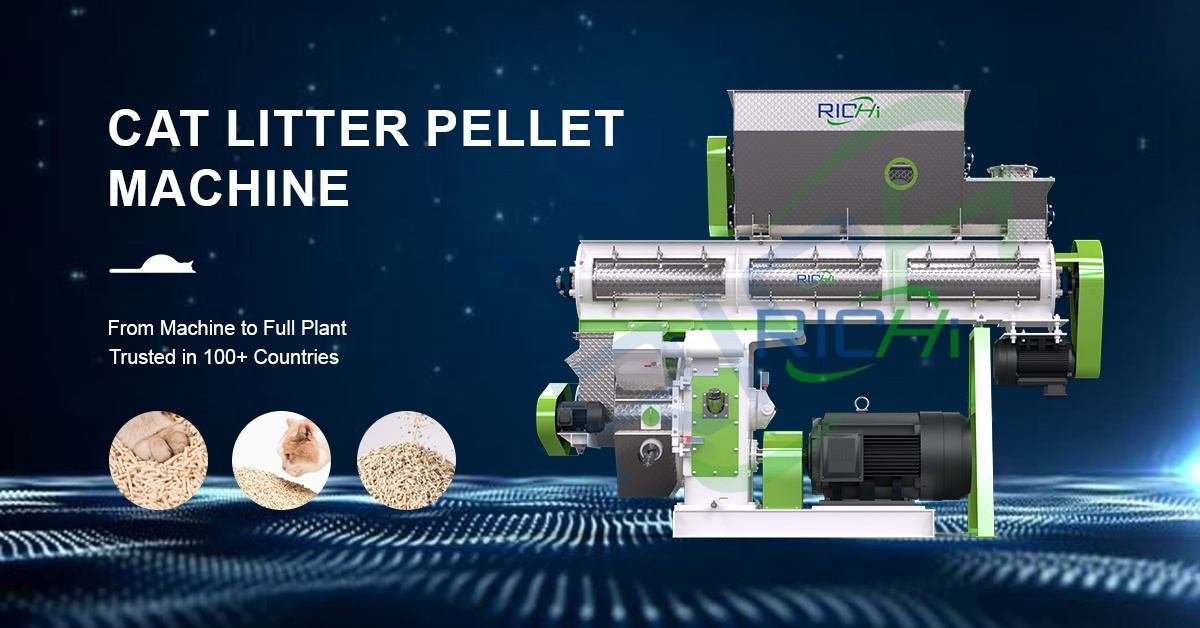
15. Choosing a Pellet Mill for Tofu Cat Litter
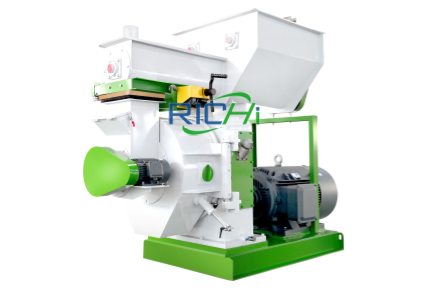
The pellet mill should be selected according to the material and target production capacity.
Important considerations include:
- Raw material composition
- Moisture
- Pellet diameter
- Production capacity
- Pellet density
- Motor power
- Die specifications
- Continuous operating requirements
A commercial cat litter making line should be designed so that the pellet mill works efficiently with the upstream grinding and mixing systems and downstream drying and screening equipment.
https://pelletisingmachine.com/cat-litter-pellet-machine
Equipment capacity should be balanced throughout the entire production process.
16. Controlling Tofu Cat Litter Pellet Density
Density is an important product parameter.
If the pellets are too dense, liquid may penetrate more slowly.
If they are too loose, they may break easily and generate excessive fines.
Density can be influenced by:
- Raw material composition
- Moisture
- Grinding size
- Binder
- Die compression
- Roller adjustment
Manufacturers should conduct absorption and durability tests to determine the appropriate density for their product.
17. Step 11: Dry the Fresh Pellets
Fresh pellets contain moisture after the pelletizing process.
A dryer is therefore normally required.
The dryer removes excess moisture and stabilizes the pellets.
A rotary dryer can be used in many commercial applications.
Important drying parameters include:
- Inlet temperature
- Outlet temperature
- Airflow
- Residence time
- Material feed rate
- Initial moisture
The goal is to achieve sufficient drying without unnecessarily overheating the product.
18. Step 12: Cool the Pellets
After drying, the pellets should be cooled.
The pellets may still be warm after leaving the dryer.
Cooling helps:
- Stabilize the product
- Reduce condensation
- Prepare the material for screening
- Improve packaging conditions
A counter-flow or other suitable cooler can be integrated into a larger production line.
For smaller plants, alternative cooling arrangements may be used.
19. Step 13: Screen the Finished Pellets
Screening separates the properly sized tofu cat litter from:
- Fine powder
- Broken pellets
- Oversized particles
A vibrating screen or rotary screen can be used.
The finished product should have a relatively consistent particle size.
Fines may sometimes be recycled into the production process.
Recycling suitable material can improve raw material utilization and reduce waste.
20. Step 14: Add Odor-Control Ingredients
Odor control is an important selling point for cat litter.
Depending on the product formula, manufacturers may add:
- Activated carbon
- Suitable mineral materials
- Plant-derived odor-control ingredients
- Other functional additives
Some additives may be added during mixing, while others may be applied after pelletizing.
The choice depends on the product formulation and manufacturing process.
21. Step 15: Apply Fragrance if Required
Not all tofu cat litter needs fragrance.
Some products are designed as unscented litter, while others use mild fragrances.
Possible fragrance concepts include:
- Natural plant aromas
- Fresh scents
- Floral scents
The target market should be considered when choosing whether to add fragrance.
The additive must also be appropriate for pet-product applications.
22. Step 16: Final Quality Inspection
Before packaging, the finished product should be inspected.
Important quality indicators include:
Moisture
The product should be sufficiently dry for stable storage.
Pellet Size
The particle size should meet product specifications.
Pellet Durability
The pellets should resist excessive breakage during handling.
Absorption
The litter should absorb liquid efficiently.
Dust
The product should contain an appropriately low amount of fines.
Odor Control
The product should provide the intended odor-management performance.
23. Testing Absorption
Absorption is one of the most important characteristics of tofu cat litter.
A manufacturer should evaluate:
- Absorption speed
- Total liquid absorption
- Liquid retention
- Pellet breakdown after wetting
The test results can help determine whether the formula and pellet density need adjustment.
High absorption does not necessarily mean the product should absorb liquid instantly. The product should provide a practical balance between absorption speed, clumping, and easy cleaning.
24. Testing Clumping Performance
Some tofu cat litter products are designed to clump.
Clumping performance depends on:
- Soybean fiber
- Starch
- Moisture
- Pellet density
- Particle size
A good clumping product should form a stable mass after absorbing liquid.
The clump should also be easy to remove from the litter box.
Manufacturers should test different formulations and pelletizing conditions to find the best combination.
25. Controlling Dust
Low dust is an important characteristic for premium tofu cat litter.
Dust can be generated during:
- Grinding
- Pelletizing
- Drying
- Cooling
- Screening
- Packaging
- Transportation
To reduce dust, manufacturers can:
- Optimize grinding.
- Improve pellet strength.
- Use efficient screening.
- Remove fines.
- Install dust collectors.
- Minimize excessive mechanical handling.
A properly designed production line can significantly reduce material losses and dust generation.
26. Packaging Tofu Cat Litter
After quality control, the finished product is ready for packaging.
Common retail package sizes include:
- 5 kg
- 6 kg
- 10 kg
- 12 kg
- 15 kg
The exact size depends on the market.
Packaging should protect the product from:
- Moisture
- Humidity
- Contamination
- Mechanical damage
Automatic weighing and bagging equipment can improve packaging accuracy and production efficiency.
27. Storing Tofu Cat Litter
Because tofu cat litter is plant-based, moisture protection is especially important.
The finished product should be stored in:
- Dry warehouses
- Clean areas
- Well-ventilated facilities
- Moisture-protected conditions
Bags should be protected from direct contact with water.
Poor storage conditions can cause the pellets to absorb moisture and lose their original strength.
28. Complete Tofu Cat Litter Production Process
The overall production process can be summarized as:
Soybean Residue
↓
Cleaning
↓
Drying
↓
Crushing
↓
Grinding
↓
Screening
↓
Mixing
↓
Moisture Adjustment
↓
Pelletizing
↓
Drying
↓
Cooling
↓
Screening
↓
Odor-Control Treatment
↓
Packaging
↓
Finished Tofu Cat Litter
The exact sequence can vary depending on the moisture content of the soybean residue and the selected production technology.
29. Equipment Needed to Make Tofu Cat Litter
A commercial tofu cat litter machine system may include the following equipment:
Raw Material Section
- Receiving hopper
- Conveyor
- Cleaner
- Storage system
Pretreatment Section
- Crusher
- Hammer mill
- Dryer
- Screening machine
Mixing Section
- Batching system
- Mixer
- Liquid addition system
Pelletizing Section
- Pellet mill
- Feeding system
- Die and roller assembly
Post-Processing Section
- Dryer
- Cooler
- Vibrating screen
Treatment Section
- Coating or spraying equipment
- Odor-control additive system
Packaging Section
- Automatic weighing machine
- Bagging machine
- Sealing machine
- Finished-product conveyor
A dust collection system can also be integrated into the production line.
30. Small-Scale Tofu Cat Litter Production
A small manufacturer can start with a compact production system.
Depending on the raw material condition, the basic equipment may include:
- Dryer
- Grinder
- Mixer
- Pellet mill
- Cooler
- Screener
- Packing machine
Some raw material handling operations can be completed manually at low production capacity.
This can reduce the initial investment required to test a new tofu cat litter product.
However, the equipment should still be selected as a complete system to avoid production bottlenecks.
31. Large-Scale Tofu Cat Litter Production
For large-scale commercial production, automation can be added throughout the plant.
A larger factory may include:
- Automatic raw material receiving
- Cleaning
- Drying
- Grinding
- Batching
- Mixing
- Pelletizing
- Drying
- Cooling
- Screening
- Odor-control treatment
- Packaging
- Palletizing
- PLC control
Automation can improve production consistency and reduce labor requirements.
32. How to Improve Tofu Cat Litter Quality
Manufacturers can improve product quality by controlling several key variables.
Use Clean Soybean Residue
The raw material should be fresh and free from contamination.
Optimize Moisture
Both excessive and insufficient moisture can affect pellet quality.
Control Grinding
The particle size should be appropriate for pelletizing.
Optimize the Formula
Balance soybean fiber, starch, additives, and other ingredients.
Adjust Pellet Density
Avoid overly dense or fragile pellets.
Improve Screening
Remove excessive fines and oversized particles.
Protect the Finished Product
Use moisture-resistant packaging and proper storage.
33. How to Reduce Tofu Cat Litter Production Costs
Raw material cost is only one component of production cost.
Manufacturers should also consider:
- Energy consumption
- Labor
- Equipment maintenance
- Material losses
- Packaging
- Transportation
- Warehouse costs
Several measures can improve overall economics.
Use Local Soybean Residue
Shorter transportation distances can reduce logistics costs.
Optimize Drying
Drying can consume significant energy, so dryer efficiency is important.
Recycle Suitable Fines
Recycling can reduce material waste.
Automate Material Handling
Automation can reduce labor and improve production continuity.
Maintain Equipment
Proper maintenance reduces unexpected downtime.
34. How to Build a Tofu Cat Litter Factory
Before building a factory, manufacturers should define:
- Raw material source
- Raw material moisture
- Product formula
- Pellet diameter
- Production capacity
- Packaging size
- Factory area
- Automation level
- Energy source
The production line should then be designed around these parameters.
A professional equipment supplier can conduct raw material tests and recommend a suitable process configuration.
35. RICHI Cat Litter Making Line
RICHI Manufacture can provide customized solutions for manufacturers interested in producing plant-based and tofu-style cat litter.
A complete cat litter making line can be configured around soybean residue and other plant-based raw materials.
Depending on the raw material and product specifications, the system can include:
Raw Material Cleaning → Drying → Crushing → Grinding → Mixing → Pelletizing → Drying → Cooling → Screening → Coating → Packaging
The equipment configuration can be customized according to:
- Raw material moisture
- Raw material composition
- Production capacity
- Pellet diameter
- Product density
- Drying requirements
- Packaging specifications
- Factory layout
For commercial projects, RICHI can provide turnkey services covering customized production line design, equipment manufacturing, overseas transportation and customs clearance, on-site installation and commissioning, operator training, spare parts supply, and long-term technical support.
This allows customers to develop a complete production system rather than purchasing individual machines without considering the complete material flow.
36. Why a Complete Production Line Is Better Than Individual Machines
Producing tofu cat litter involves several interconnected processes.
If each machine is purchased separately without considering system compatibility, problems may occur.
For example:
- The grinder may produce too much material for the pellet mill.
- The pellet mill may produce more pellets than the dryer can handle.
- The screen may not have enough capacity.
- The packaging machine may become a bottleneck.
A complete production line coordinates the capacity of each stage.
This can improve:
- Material flow
- Production efficiency
- Automation
- Product consistency
- Labor efficiency
- Factory management
37. Future Development of Tofu Cat Litter
The plant-based cat litter market continues to develop.
Future product innovation may focus on:
- Higher absorption
- Better clumping
- Lower dust
- Better odor control
- Lighter products
- Improved biodegradability
- Better pellet durability
- More efficient manufacturing
Manufacturers can also experiment with combinations of soybean residue, corn, cassava, wood fiber, grass fiber, and other suitable plant materials.
The key is to develop formulas based on actual product testing.
Conclusion
Making tofu cat litter for cats involves much more than simply turning soybean residue into pellets. The process starts with selecting clean and suitable soybean residue and then controlling drying, grinding, mixing, moisture adjustment, pelletizing, drying, cooling, screening, odor treatment, and packaging.
The basic process can be summarized as:
Soybean Residue → Cleaning → Drying → Grinding → Mixing → Pelletizing → Drying → Cooling → Screening → Treatment → Packaging
The quality of the finished product depends on the raw material, formula, moisture, particle size, pellet density, and processing conditions. Manufacturers need to balance absorption, clumping, durability, dust, odor control, and production cost to create a competitive product.
A properly designed cat litter making line can connect all of these stages into an integrated manufacturing system. For small producers, a compact configuration can provide an economical way to enter the market. For large manufacturers, automated batching, grinding, mixing, pelletizing, drying, cooling, screening, coating, and packaging systems can support continuous commercial production.
For businesses located near tofu or soybean-processing facilities, soybean residue can provide an attractive source of plant-based raw material. With appropriate processing technology and quality control, this by-product can be transformed into a convenient and commercially valuable cat litter product.
Ultimately, successful tofu cat litter production depends on the right raw material, optimized formulation, suitable pelletizing technology, efficient drying, effective screening, and proper packaging. By integrating these elements into a well-designed production system, manufacturers can produce consistent tofu cat litter that meets the expectations of modern pet owners while making better use of plant-based resources.