

The aquaculture industry has become one of the fastest-growing food production sectors worldwide. With increasing global demand for seafood and declining pressure on natural fisheries, fish farming has taken on a crucial role in ensuring a stable supply of aquatic products. However, the future growth of aquaculture depends not only on expanding production capacity but also on improving efficiency, sustainability, and environmental performance.
Among all factors influencing aquaculture success, fish feed remains one of the most important. Feed accounts for a significant portion of operating costs in fish farming, and its quality directly affects fish growth, feed conversion ratio, water quality, and farm profitability. As aquaculture becomes more advanced, traditional feed processing methods are gradually being replaced by more efficient and intelligent technologies.
Fish feed extrusion technology is expected to play an increasingly important role in the future development of aquaculture. Through advanced processing methods, extrusion can improve nutrient utilization, enhance pellet quality, reduce feed waste, and support the production of customized feed products for different aquatic species.
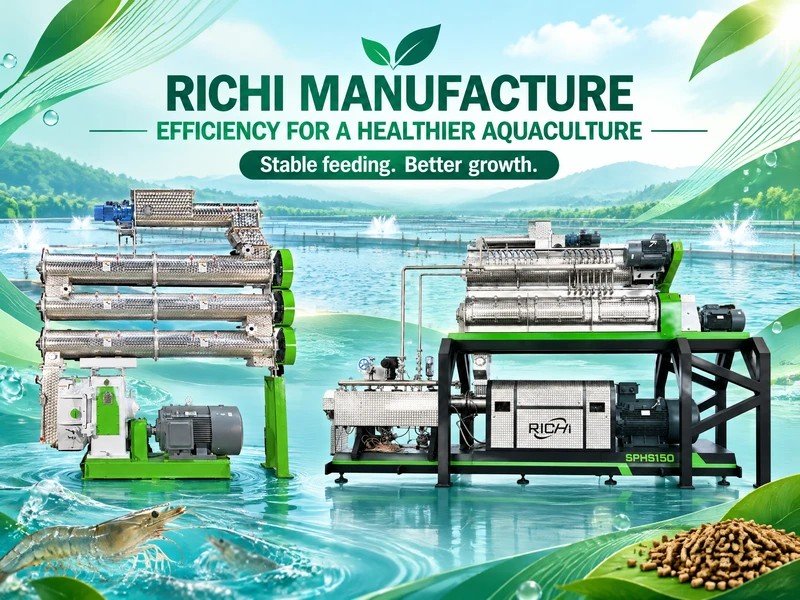
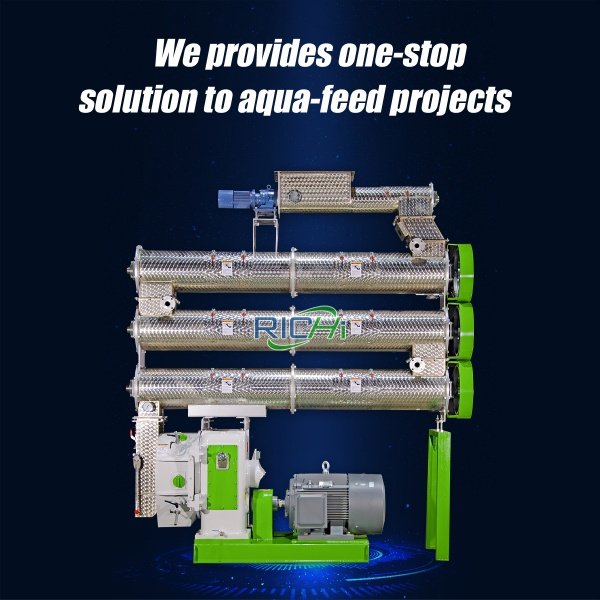
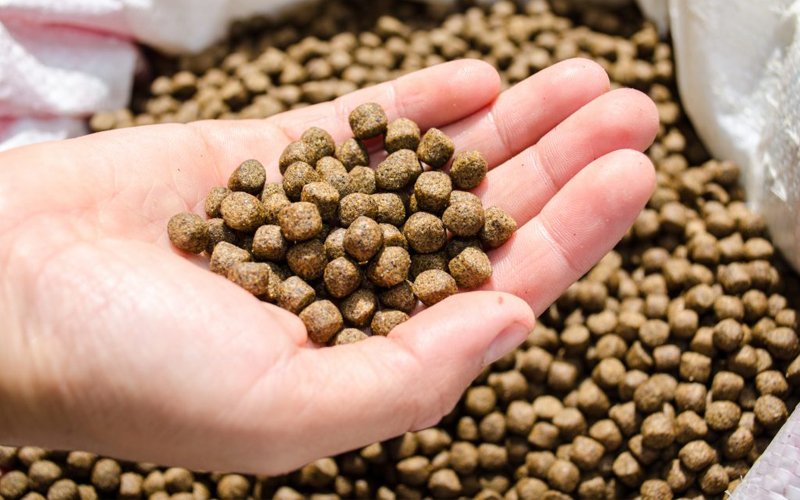
A complete floating fish feed production line equipped with advanced extrusion technology represents the future direction of modern aquafeed manufacturing. It integrates raw material processing, extrusion, drying, cooling, and packaging into an efficient production system, enabling manufacturers to produce high-quality floating feed on a large scale.
As technology continues to evolve, fish feed extrusion will become smarter, more sustainable, and more adaptable, providing strong support for the continued growth of global aquaculture.
The Current Role of Fish Feed Extrusion Technology in Aquaculture
Fish feed extrusion technology is an advanced manufacturing process that uses heat, moisture, pressure, and mechanical shear to transform feed ingredients into high-quality aquatic pellets.
Unlike traditional pelletizing methods, extrusion creates significant changes in feed structure and nutritional characteristics.
During extrusion:
- Starch is gelatinized to improve digestibility
- Proteins are modified to increase nutrient availability
- Ingredients are bonded into stable pellets
- Pellet density can be controlled for floating or sinking feed production
This technology allows manufacturers to produce different types of aquatic feed, including:
- Floating fish feed
- Slow-sinking feed
- Sinking feed
- Specialty feed products
The ability to control pellet characteristics makes extrusion technology highly valuable for modern aquaculture operations.
1. The Future Will Focus on Intelligent Fish Feed Extrusion Systems
One of the most important future trends in fish feed extrusion technology is intelligent manufacturing.
Traditional extrusion systems often require manual adjustment of production parameters. However, future extrusion equipment will increasingly use digital technologies, sensors, and automation systems to achieve more precise control.
Intelligent extrusion systems will monitor and adjust:
- Temperature
- Moisture content
- Pressure levels
- Screw speed
- Feeding rate
- Production output
through real-time data analysis.
Benefits of Intelligent Control
Smart extrusion systems will provide:
More Stable Production
Automatic adjustment reduces fluctuations during operation and ensures consistent pellet quality.
Higher Efficiency
Manufacturers can optimize production parameters and reduce unnecessary energy consumption.
Lower Human Error
Automated systems minimize operational mistakes and improve production reliability.
In the future, intelligent control will become a standard feature of advanced aquafeed production facilities.
2. More Sustainable Fish Feed Production
Sustainability is one of the biggest challenges facing the aquaculture industry. Future fish feed extrusion technology will focus heavily on reducing environmental impact while maintaining high feed performance.
Extrusion technology supports sustainable aquaculture in several ways.
Improved Feed Utilization
High-quality extruded feed allows fish to absorb nutrients more effectively, reducing the amount of feed required for growth.
Better feed conversion means:
- Lower resource consumption
- Reduced farming costs
- Less environmental pressure
Reduced Feed Waste
Extruded pellets have excellent water stability, which reduces nutrient loss after entering the water.
This helps:
- Maintain better water quality
- Reduce organic pollution
- Improve farming conditions
Support for Alternative Ingredients
Future extrusion systems will allow manufacturers to use more sustainable ingredients, such as:
- Plant proteins
- Insect protein
- Algae-based ingredients
- Agricultural by-products
Advanced extrusion processing can improve the usability of these alternative materials and support more environmentally friendly feed production.
3. Development of More Efficient Floating Fish Feed Production Lines
Floating feed has become increasingly popular because it improves feeding management and reduces waste. As aquaculture farms become larger and more professional, demand for efficient floating feed production systems will continue to increase.
A modern floating fish feed production line will become more automated, energy-efficient, and flexible in the future.
https://richipelletizer.com/aqua-feed-plant
A complete production line usually includes:
- Raw material cleaning system
- Grinding equipment
- Mixing system
- Conditioning system
- Extrusion system
- Drying equipment
- Cooling system
- Screening system
- Oil coating system
- Packaging equipment
Future production lines will focus on improving:
Higher Automation
Automatic production management will allow operators to monitor the entire process through centralized control systems.
Greater Production Flexibility
Manufacturers will be able to quickly adjust formulas and pellet sizes according to market demand.
Better Energy Efficiency
New equipment designs will reduce electricity consumption and improve production economics.
The development of advanced floating fish feed production lines will help feed manufacturers meet the growing demand for high-quality aquatic feed.
4. Customized Fish Feed Production Will Become More Important
Aquaculture species have different nutritional requirements and feeding behaviors. In the future, fish feed production will move toward more customized solutions.
Different species require different:
- Protein levels
- Pellet sizes
- Pellet densities
- Nutrient compositions
Extrusion technology provides the flexibility needed for customized feed manufacturing.
For example:
Carnivorous Fish
Species such as salmon and trout require high-protein feed with excellent digestibility.
Herbivorous and Omnivorous Fish
Species such as tilapia and carp require balanced feed formulas with suitable energy sources.
Shrimp and Specialty Aquatic Species
These species need feed with specific hardness, stability, and nutritional characteristics.
Future extrusion systems will allow manufacturers to produce specialized feed products more efficiently.
5. Advanced Extrusion Equipment Will Improve Production Performance
The future of fish feed extrusion technology will depend heavily on improvements in equipment design.
Next-generation extruders will focus on:
- Higher output capacity
- Lower energy consumption
- Longer service life
- Easier maintenance
- Better process control
Advanced extrusion machines will include improvements such as:
Optimized Screw Design
Better screw structures will improve material flow and reduce energy loss.
Improved Die Technology
Advanced dies will provide more precise pellet shaping and better production efficiency.
Stronger Wear Resistance
High-quality materials will extend equipment lifespan and reduce maintenance costs.
These improvements will help manufacturers achieve more reliable and economical production.
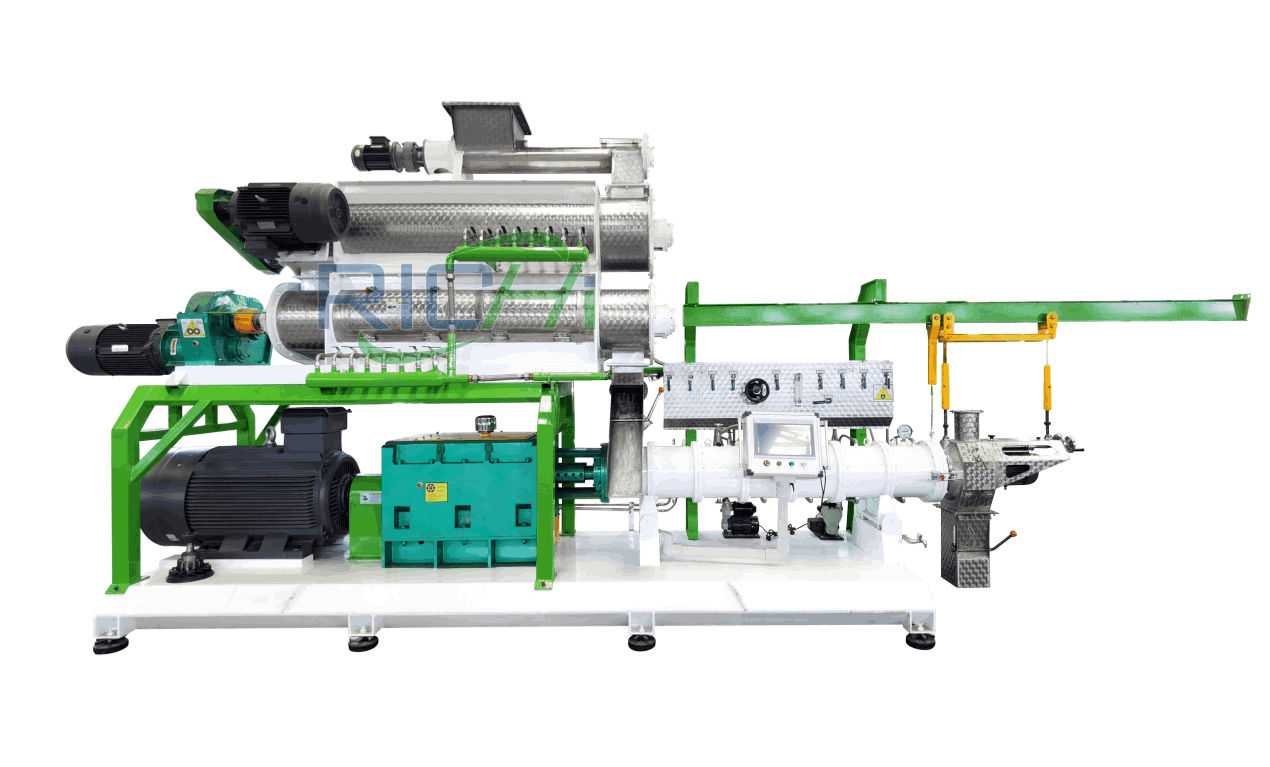
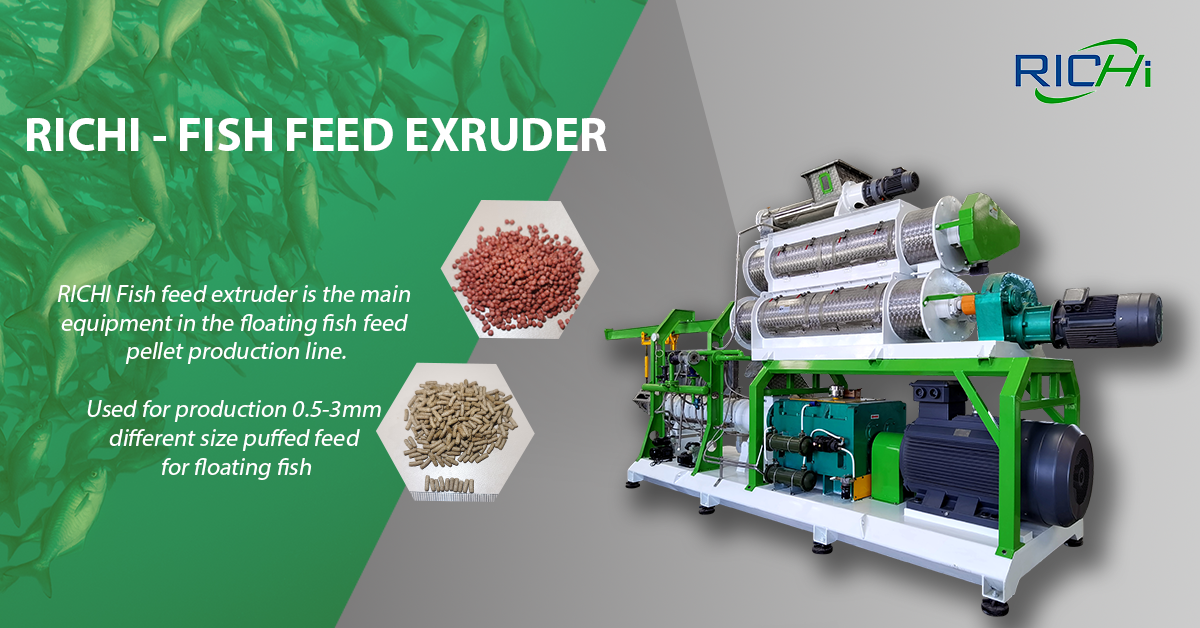
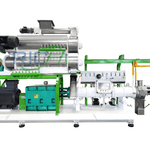
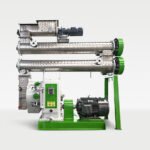
(Related machine: efficient floating fish feed extruder machine)
6. Better Nutritional Preservation During Processing
Although extrusion involves high temperatures, future technologies will focus on maximizing nutrient retention.
Advanced systems will improve control over:
- Heating intensity
- Processing time
- Moisture distribution
This will help protect sensitive nutrients such as:
- Vitamins
- Amino acids
- Functional additives
- Essential fatty acids
Better nutritional preservation will allow manufacturers to produce feed with higher biological value.
7. Digital Monitoring and Data-Based Production Optimization
Data technology will become an important part of future aquafeed manufacturing.
Production data collected from extrusion systems can be analyzed to identify:
- Equipment performance
- Energy consumption
- Product quality trends
- Process optimization opportunities
Digital management systems will help manufacturers:
- Predict equipment maintenance needs
- Reduce downtime
- Improve production planning
- Maintain consistent quality
Data-driven production will make fish feed extrusion more efficient and competitive.
8. Integration with Complete Aquafeed Manufacturing Solutions
Future fish feed extrusion technology will not operate as an isolated process. Instead, it will become part of fully integrated aquafeed production solutions.
A complete system will combine:
- Raw material handling
- Ingredient processing
- Feed formulation
- Extrusion
- Drying
- Packaging
- Quality control
This integrated approach will provide several advantages:
- Higher automation
- Better production coordination
- Lower labor requirements
- Improved product consistency
For large commercial feed manufacturers, turnkey extrusion solutions will become increasingly important.
9. Expansion of Eco-Friendly Feed Formulas
The future of aquaculture requires feed products that are both efficient and environmentally responsible.
Extrusion technology will support the development of new feed formulas using:
- Sustainable protein sources
- Low-carbon ingredients
- Functional additives
- Health-promoting components
Future feed products may focus not only on growth performance but also on:
- Improving fish immunity
- Reducing disease risks
- Enhancing environmental adaptability
Extrusion provides the processing flexibility needed to develop these innovative feed products.
10. Improving Aquaculture Profitability Through Better Feed Technology
The ultimate goal of future fish feed extrusion technology is to improve economic performance for both feed manufacturers and fish farmers.
Advanced extrusion helps achieve profitability through:
Lower Production Costs
Efficient equipment reduces energy consumption and operating expenses.
Better Feed Efficiency
Higher-quality feed improves fish growth and reduces feed requirements.
Reduced Waste
Stable pellets minimize feed loss and improve water management.
Higher Product Value
Premium-quality feed allows manufacturers to compete in higher-value markets.
As aquaculture becomes more competitive, efficient feed production will become a key factor determining business success.
Challenges Facing Future Fish Feed Extrusion Technology
Although extrusion technology has great potential, several challenges remain.
Rising Equipment Investment Costs
Advanced extrusion systems require significant initial investment.
Need for Technical Expertise
Operators need proper training to optimize production parameters.
Changing Raw Material Availability
Manufacturers must continuously adapt to new ingredient sources.
Energy Consumption Concerns
Future technologies must focus on improving energy efficiency.
Addressing these challenges will be essential for the continued development of extrusion technology.
The Future Outlook of Fish Feed Extrusion Technology
The future of fish feed extrusion technology is closely connected with the development of smart manufacturing, sustainable aquaculture, and customized nutrition.
In the coming years, extrusion systems will become:
- More automated
- More energy-efficient
- More environmentally friendly
- More flexible
- More intelligent
Manufacturers that adopt advanced extrusion technology will be better positioned to meet the increasing global demand for high-quality aquatic feed.
The combination of intelligent equipment, sustainable ingredients, and optimized production processes will create a new generation of aquafeed manufacturing.
Conclusion
Fish feed extrusion technology will continue to play a central role in the future growth of global aquaculture. By improving feed quality, increasing nutrient utilization, reducing waste, and supporting customized feed production, extrusion provides an effective solution for modern fish farming challenges.
The development of advanced floating fish feed pellet production lines will further improve the efficiency and sustainability of aquafeed manufacturing. Through automation, intelligent control, and energy-saving innovations, future production systems will enable manufacturers to produce higher-quality feed with lower environmental impact.
As aquaculture continues to expand worldwide, fish feed extrusion technology will remain a key driver supporting efficient, sustainable, and profitable aquatic farming for the future.